Private limited company registration in India requires 2 directors, 2 shareholders, and SPICe+ filing. Complete guide covering Section 2(68), registration steps, documents, fees, and critical post-incorporation compliance. This article is written by Neeli Neelay Shah, Senior Legal Content Writer at LawSikho.

If you are a law student preparing for company law examinations, an early-career professional advising clients on business structures, or an entrepreneur ready to formalize your startup, understanding private limited company registration is foundational knowledge you cannot do without. Private limited companies constitute approximately 96% of all registered companies in India, making this the dominant corporate structure in the country. With over 185,000 new companies incorporated in FY 2023-24 alone, the demand for professionals who understand the registration process continues to grow. This guide will walk you through everything you need to know, from the legal definition to the registration steps and critical post-incorporation compliance. 

Before diving into registration procedures, you need to understand what legally makes a company “private.” The definition is found in Section 2(68) of the Companies Act, 2013 (“the Act”), and it is not merely academic knowledge. This definition determines what restrictions your Articles of Association must contain, what exemptions the company can claim, and how the company can raise capital throughout its existence.

Download Now

According to Section 2(68), a private company is one which, by its articles, restricts the right to transfer its shares, limits the number of its members to 200 (excluding present and former employees), and prohibits any invitation to the public to subscribe for its securities. Think of these as the three walls that define the “private” character of the company. Without these restrictions in your Articles of Association, the Registrar will not approve your incorporation as a private limited company.

Three Mandatory Restrictions for Private Companies

Restriction on Transfer of Shares

The restriction on share transfer means shareholders cannot freely sell their shares to anyone they want. Typically, the Articles require that existing shareholders get the first opportunity to buy shares before an outsider can purchase them. This keeps ownership within a controlled group, which is exactly what most founders want.

Limitation on Number of Members to 200

The 200-member limit sounds restrictive, but for most startups and SMEs, this is never a practical concern. Moreover, employees and former employees who hold shares are not counted in this limit. This matters when you implement Employee Stock Option Plans (ESOPs) because employees exercising their options and becoming shareholders will not push you toward the 200 limit.

Prohibition on Public Invitation for Securities

The prohibition on public invitation means no IPO, no public offering, and no listing on stock exchanges. Private companies raise money through private placement from angel investors, venture capital funds, and private equity investors, not from the general public. If you ever want to access public markets, you will need to convert to a public company first.

This is perhaps the most common question law students and entrepreneurs ask: which structure is right? The answer depends on your goals, but for most growth-oriented businesses, a private limited company wins on several factors.

Compared to a Limited Liability Partnership (LLP), a private limited company offers significantly better fundraising capability. Venture capitalists and institutional investors prefer the equity structure of private companies because they can acquire shares, implement anti-dilution protections, and plan exits through share sales. LLPs cannot issue shares, making equity financing nearly impossible. FDI in private companies is permitted under the automatic route in most sectors, while LLP investment requires RBI approval.

Compared to a sole proprietorship, the private limited company offers limited liability protection. In a proprietorship, your personal assets are at risk if the business fails. In a private company, your liability is limited to your shareholding. The company is a separate legal entity that can own property, sue, and be sued in its own name. Yes, compliance is higher in a private company, but the protection and credibility benefits usually outweigh the additional paperwork.

Before you open the MCA portal and start filling forms, you need to ensure certain minimum requirements are met. Getting these wrong means application rejection and wasted fees.

Minimum Number of Directors and Shareholders

A private limited company needs minimum two directors and minimum two shareholders. The good news: the same two people can serve as both directors and shareholders. So technically, you and a co-founder can incorporate a company with just the two of you filling all four positions.

Directors must be individuals (not companies or LLPs), must be at least 18 years old, and must not be disqualified under Section 164 of the Act. Most importantly, at least one director must be a resident of India, meaning they must have physically stayed in India for at least 182 days in the previous calendar year. This resident director requirement cannot be waived.

Shareholders can be individuals or body corporates (including foreign companies). There is no residency requirement for shareholders. Foreign nationals can be shareholders in Indian private companies, though the investment must comply with FEMA regulations and FDI policy.

One persistent myth: there is no minimum capital requirement. The earlier requirement of ₹1 lakh paid-up capital was repealed in 2015. You can incorporate with any amount, even ₹10,000. However, keep in mind that very low capital may raise questions from banks and potential investors about your seriousness.

Shareholding Structure and Capital Requirements

A private limited company requires a minimum of two shareholders and can have up to 200 members, excluding current and former employees. Shareholders can be individuals or corporate entities (including foreign companies), with no residency restrictions, unlike directors. The same two persons can act as both directors and shareholders, making incorporation possible with just two individuals.

The minimum paid-up capital requirement of ₹1 lakh was repealed by the Companies (Amendment) Act, 2015, effective May 29, 2015. Currently, no statutory minimum capital is mandated; companies can incorporate with as little as ₹1,000. The authorized capital should be strategically determined during incorporation, as subsequent increases require Form SH-7 filing with additional fees and stamp duty.

Registered Office 

Every company must establish a registered office from incorporation, serving as the official address for all communications and legal notices. Section 12 mandates verification of this address with the Registrar within 30 days through Form INC-22.

The registered office can be a commercial property, co-working space, or residential premises; there is no legal bar on using residential addresses, though housing society or landlord restrictions may apply. The address must be a valid physical location within India where statutory registers and records are maintained or accessible for inspection.

The Ministry of Corporate Affairs introduced SPICe+ (Simplified Proforma for Incorporating Company Electronically Plus) in February 2020. This single web-based form replaced multiple earlier forms and integrated 10 services from 3 Central Government ministries. Understanding this process is essential for any company law examination and practical advisory work.

Step 1: Reserving Your Company Name Through SPICe+ Part A

Your company name is its identity, and the MCA is strict about what names are permitted. Rule 8 of the Companies (Incorporation) Rules, 2014 provides detailed naming guidelines.

Names that will be rejected include: names identical or similar to existing companies or LLPs, names similar to registered trademarks without NOC, names using restricted words like “Bank,” “Insurance,” “National,” or “Republic” without approval, and generic names that do not have a distinctive element.

A good company name has three parts: a distinctive word (your unique identifier), a descriptive word (indicating your business), and “Private Limited” at the end. For example, “Nexus Technologies Private Limited” follows this structure.

You file SPICe+ Part A for name reservation, proposing up to two names in order of preference. The fee is ₹1,000. Once approved, the name is reserved for 20 days, within which you must file Part B for incorporation. If you miss the deadline, the name lapses and someone else can take it.

Step 2: Applying for Director Identification Number (DIN) 

Every individual appointed as a director must obtain a Director Identification Number (DIN) under Section 153 of the Companies Act, 2013. This unique identification number remains valid for life unless surrendered or deactivated due to disqualification. DIN serves as a permanent identifier across all directorships held by an individual.

For new company incorporations, DIN for up to three directors can be obtained directly through the SPICe+ form, eliminating separate applications. The form captures personal details, identity proof, address proof, and photographs, with DIN allotted upon incorporation approval. Companies requiring more than three directors must incorporate with three initially and appoint additional directors later.

For directors joining existing companies or additional directors beyond the initial three, Form DIR-3 must be filed separately with a fee of ₹500. The application requires personal information, identity and address proof, and digital signature certification by a practicing professional (CA, CS, or Cost Accountant). Processing typically takes 3-5 working days, with the DIN approval letter sent via email.

Step 3: Getting Your Digital Signature Certificate (DSC)

Every person, including all proposed directors and all subscribers to the Memorandum of Association, who will sign incorporation documents needs a Digital Signature Certificate. If someone is both a director and subscriber (which is common), one DSC works for both purposes. You can obtain DSC from certifying authorities licensed by the Controller of Certifying Authorities. Popular providers include eMudhra and Sify.

For foreign nationals, the DSC must still be from an Indian certifying authority, but documents like passport and address proof must be apostilled or consularised from their home country.

Step 4: Filing for Incorporation Through SPICe+ Part B

SPICe+ Part B is where the actual incorporation happens. This form captures company details, director information, shareholder details, capital structure, and registered office address. Along with it, you will complete linked forms:

e-MOA (INC-33): The electronic Memorandum of Association containing the company’s name, objects, liability clause, and capital clause. All subscribers must digitally sign it.

e-AOA (INC-34): The electronic Articles of Association containing internal rules for managing the company. Private companies can adopt standard Table F of the Schedule I of the Act or create customized articles.

AGILE-PRO (INC-35): This linked form applies for GST registration (optional), EPFO registration, ESIC registration, Professional Tax registration (Maharashtra), and initiates bank account opening.

INC-9: Declaration by all subscribers and directors that all information is true and they are not involved in any fraud.

When all forms are completed and digitally signed, you upload them to the MCA portal and pay the fees. The Central Registration Centre processes the application and, if approved, issues the Certificate of Incorporation containing the company’s CIN (Corporate Identity Number), along with PAN and TAN.

Here is a consolidated checklist of documents you will need:

For Directors (Indian Nationals):

  • PAN card (mandatory)
  • Address proof: Aadhaar, Voter ID, Passport, or Driving License
  • Passport-size photograph

For Directors (Foreign Nationals):

  • Passport (entire copy, apostilled/notarized)
  • Address proof from home country (apostilled/notarized)
  • Photograph

For Registered Office:

  • If owned: Sale deed or property tax receipt, plus recent utility bill
  • If rented: Rent agreement, recent utility bill in owner’s name, No Objection Certificate from owner

Digital Signature Certificates:

  • Class 3 DSC for all directors and subscribers (obtained from licensed certifying authorities)

MCA Registration Fees

The MCA fee structure is prescribed in the Companies (Registration Offices and Fees) Rules, 2014, as amended from time to time. Fees depend primarily on the authorized capital of the company.

SPICe+ Part A and Part B Filing Fees

SPICe+ Part A (Name Reservation): The fee is ₹1,000 regardless of the authorized capital.

SPICe+ Part B (Incorporation): The fee structure for incorporation is as follows:

Authorized Capital Filing Fee
Up to ₹1,00,000 Nil
₹1,00,001 to ₹5,00,000 ₹2,000
₹5,00,001 to ₹10,00,000 ₹2,000 + ₹200 for every ₹1,00,000 above ₹5,00,000
Above ₹10,00,000 Calculated as per slab

Fee Exemption for Companies with Authorized Capital Up to ₹15 Lakh

For companies with authorized capital up to ₹15 lakh, the SPICe+ Part B filing fee is minimal or nil. This is a significant incentive for startups and small businesses. The zero-fee structure for small companies is part of the government’s Ease of Doing Business initiative.

However, remember that stamp duty is separate and payable based on state-specific rates. So while MCA fees may be nil, stamp duty will still apply.

Additional Fees for DIN, PAN, and TAN Application

DIN: When applied through SPICe+, DIN allotment is included in the incorporation fee at no additional cost. If applied separately through DIR-3, the fee is ₹500 per DIN.

PAN and TAN: These are automatically processed through the SPICe+ system. The combined fee for PAN and TAN application is approximately ₹150-200, which is included in the overall SPICe+ processing.

State-Wise Stamp Duty Variation 

Stamp duty is a state subject under the Indian Constitution, meaning each state has its own Stamp Act and fee structure. Stamp duty is payable on the Memorandum of Association, Articles of Association, and certain other incorporation documents. The duty is calculated based on the authorized capital and the state-specific rates. Higher authorized capital means higher stamp duty.

Some states have a flat rate system while others use an ad valorem (percentage-based) system. For example, in the State of Maharashtra, the stamp duty payable by a Company (whether it has no share capital or nominal share capital or increased share capital) towards Articles of Association is 0.3 per cent on share capital or increased share capital (ad-valorem), subject to a maximum of Rs, 1,00,00,000; and towards Memorandum of Association (if accompanied with AoA) it is Rs. 1000 (flat rate). 

Stamp duty increases with higher authorized capital. Always verify current rates on the respective state’s stamp duty portal or through the MCA SPICe+ system, which auto-calculates stamp duty.

E-Stamp Duty Payment Through SPICe+

The SPICe+ system has integrated e-stamp duty payment, making the process seamless. When filing SPICe+ Part B, the system automatically calculates the applicable stamp duty based on the selected state and authorized capital. The duty is paid online along with the MCA filing fees.

This integration has eliminated the earlier requirement of purchasing physical stamp papers, getting documents franked, and uploading stamped documents. The e-stamping is reflected in the final incorporation documents.

Getting the Certificate of Incorporation feels like crossing the finish line, but it is actually the starting point. Several mandatory compliances must be completed within specific timelines, and missing them carries penalties that can be severe.

Private Limited Company Registration: First 30 Days Compliance Requirements 

First Board Meeting: Section 173(1) of the Act requires the first board meeting within 30 days of incorporation. In this meeting, you will typically: appoint the first statutory auditor, authorize opening the bank account, adopt the registered office, and pass resolutions on various administrative matters. Minutes must be prepared and signed by the chairperson.

Auditor Appointment: Section 139(6) of the Act mandates appointing the first auditor within 30 days. The auditor must be a practicing Chartered Accountant or CA firm. They provide consent in Form ADT-1, which must be filed with ROC within 15 days of appointment. The first auditor serves until the first AGM.

Bank Account: Open a current account in the company’s name and deposit the subscription money (what shareholders agreed to pay for their shares). This is essential for the next critical filing.

Share Certificates: Within 60 days of incorporation, issue share certificates to all subscribers. These must be signed by directors and bear the company seal if you have adopted one.

Form INC-20A Filing Requirements

This is perhaps the most critical post-incorporation filing, and many new directors are not aware of it until it becomes a problem.

Under Section 10A, inserted by the 2018 amendment, a company with share capital must file Form INC-20A within 180 days of incorporation. This declaration confirms that every subscriber has paid the value of shares agreed to be taken by them.

What happens if you do not file within 180 days?

  • The company cannot legally commence business or exercise borrowing powers
  • The company faces a penalty of ₹50,000
  • Every officer in default (typically directors) faces a penalty of ₹1,000 per day of continuing default
  • The Registrar may initiate action to strike off the company

The form requires a bank statement showing receipt of subscription money and must be digitally signed by a director and certified by a practicing professional. The filing fee is just ₹200, making non-compliance purely a matter of negligence, not cost.

Obtaining Additional Registrations After Private Limited Company Registration

While not all registrations are mandatory, several enhance business operations, compliance, and access to sector-specific benefits.

GST Registration

GST registration is mandatory if turnover exceeds ₹40 lakh for goods (₹20 lakh in special category states) or ₹20 lakh for services (₹10 lakh in special category states), for inter-state supplies, TDS deduction under GST, or e-commerce platform sales. Voluntary registration is advisable for B2B businesses to claim Input Tax Credit and enhance credibility. Registration can be completed through AGILE-PRO during incorporation or separately via the GST portal.

Professional Tax Registration

Professional Tax is a state-level levy applicable in Maharashtra, Karnataka, West Bengal, Gujarat, and other states. Maharashtra integrates this registration with SPICe+ through AGILE-PRO, while other states require separate registration. Companies must register as employers to deduct Professional Tax from employee salaries and director remuneration above threshold limits.

Shops and Establishment Registration

Companies with physical premises must register under the state’s Shops and Establishment Act, which governs working hours, holidays, and employment conditions. Registration is done with the local municipal corporation or labour department, requiring proof of premises, director identity proof, and business address proof.

MSME Registration and Startup India Recognition

MSME registration through the Udyam portal (udyamregistration.gov.in) is free and provides benefits including priority lending, subsidies, and delayed payment protection. Companies meeting DPIIT startup criteria (incorporated within 10 years, turnover under ₹100 crore, innovation-focused) can obtain Startup India recognition for tax exemptions under Section 80-IAC, angel tax exemption under Section 56(2)(viib), and faster IP processing with reduced fees.

Always check the latest classification thresholds and eligibility details on the official portals, as criteria (such as MSME investment and turnover limits) were revised effective April 1, 2025.

Private limited company registration in India, while procedurally streamlined through SPICe+, remains a legal process that demands attention to detail and awareness of ongoing compliance obligations. For law students, understanding Section 2(68), the registration process, and post-incorporation requirements forms the foundation of company law knowledge that will serve you throughout your career. For entrepreneurs, this knowledge helps you make informed decisions about business structure and ensures you start your venture on a compliant footing.

The key takeaways are straightforward: private companies need minimum two directors and two shareholders (can be the same people), there is no minimum capital requirement, the SPICe+ form integrates multiple services into a single application, and post-incorporation compliance begins immediately with critical deadlines at 30 days and 180 days. Miss these deadlines, and the penalties can be substantial.

Whether you are advising a client, appearing for examinations, or launching your own startup, the fundamentals covered in this guide provide the essential framework. The details may change as the MCA issues new notifications and amendments, but the underlying structure of private company registration under the Companies Act, 2013 remains your constant reference point.

For more in-depth coverage on this topic, please visit our LawSikho blog, by clicking here.

Serato DJ Crack 2025Serato DJ PRO Crack


News
Berita Teknologi
Berita Olahraga
Sports news
sports
Motivation
football prediction
technology
Berita Technologi
Berita Terkini
Tempat Wisata
News Flash
Football
Gaming
Game News
Gamers
Jasa Artikel
Jasa Backlink
Agen234
Agen234
Agen234
Resep
Cek Ongkir Cargo
Download Film


Private limited company registration in India requires 2 directors, 2 shareholders, and SPICe+ filing. Complete guide covering Section 2(68), registration steps, documents, fees, and critical post-incorporation compliance. This article is written by Neeli Neelay Shah, Senior Legal Content Writer at LawSikho. If you are a law student preparing for company law examinations, an early-career professional advising clients on business structures,


Practical roadmap to US CPA certification from India. Understand eligibility, exam structure, costs in INR, and best states for Indian candidates without SSN. This article is written by Medha Vinod, Senior Associate at LawSikho.

The US CPA credential has become increasingly accessible for Indian accounting professionals, and if you’ve been considering this path, now is an excellent time to start. With Prometric test centers operating in eight Indian cities and state boards that accommodate international candidates, you no longer need to relocate or travel abroad to earn one of the world’s most recognized accounting qualifications. The question isn’t whether it’s possible, but rather how to navigate the process efficiently.

This roadmap cuts through the complexity to give you a clear action plan. You’ll understand how your Indian qualifications translate to US credit requirements, which states offer the smoothest pathway for candidates without a Social Security Number, what the exam actually involves under the new CPA Evolution format, and what investment in time and money you should realistically expect. By the end, you’ll have the clarity needed to take your first concrete step toward CPA certification.

Download Now

Your first task is determining whether your current qualifications make you eligible for the CPA exam, and if not, what additional credentials you need. The US system measures education differently from India, using credit hours rather than degree names. Understanding this conversion is fundamental to planning your pathway.

The Credit System and How Your Indian Degree Fits

US state boards evaluate CPA candidates based on semester credit hours, with most requiring 120 credits to sit for the exam and 150 credits for full licensure. Your Indian degrees and professional qualifications get converted to this system through credential evaluation agencies that assess your transcripts and certificates.

A standard three-year Indian B.Com evaluates to roughly 90 credit hours, falling short of the 120-credit exam threshold. This means B.Com holders need additional qualifications to become eligible. However, if you hold a postgraduate degree, the picture changes significantly. An M.Com or MBA adds approximately 60 credits, bringing your total to around 150, which satisfies even the licensure requirement.

Professional certifications carry substantial weight in this calculation. The Indian CA qualification adds between 30 and 60 credits, depending on how the evaluation agency assesses it, making most CAs immediately eligible for the CPA exam when combined with their undergraduate degree. Similarly, CMA and CS certifications receive credit recognition, though typically in lower ranges than CA.

Eligibility Pathways for Different Indian Qualifications

Your starting point determines your most efficient pathway. If you hold only a B.Com, your clearest route involves completing a postgraduate qualification such as M.Com or MBA, which brings you to 150 credits and full eligibility. Alternatively, pursuing the Indian CA alongside your B.Com creates a powerful combination that qualifies you for CPA while also giving you domestic credentials.

Chartered Accountants find themselves well-positioned from the start. With CA plus B.Com typically evaluating to 120 to 150 credits, most CAs can proceed directly to credential evaluation and state board application. This makes the CA plus CPA combination particularly efficient for those wanting both Indian and international recognition.

M.Com and MBA holders with commerce undergraduate backgrounds generally meet the 150-credit threshold without additional coursework. If your credential evaluation confirms sufficient credits, you can move straight to state selection and application. The accounting content in these programs also provides useful preparation for CPA exam topics, particularly in financial accounting and business concepts.

Once you’ve confirmed eligibility, understanding what the exam actually involves helps you plan realistically. The CPA exam changed significantly in January 2024 with CPA Evolution, introducing a new structure that every candidate must understand.

CPA Exam Section Format: Core and Discipline Sections

The current CPA exam consists of three mandatory Core sections plus one Discipline section of your choice, totaling four exams you must pass. The Core sections, which every candidate takes, are: 

  • Financial Accounting and Reporting (FAR), 
  • Auditing and Attestation (AUD), and 
  • Taxation and Regulation (REG). 

Each Core section is a four-hour exam combining multiple-choice questions and task-based simulations.

Your Discipline choice adds specialization to your CPA credential. 

  • Business Analysis and Reporting (BAR) extends financial accounting into analytical and managerial topics. 
  • Information Systems and Controls (ISC) focuses on IT governance, cybersecurity, and system controls. 
  • Tax Compliance and Planning (TCP) deepens taxation knowledge beyond the Core REG section. 

Choose based on your career interests rather than perceived difficulty.

Pass rates vary across sections, providing useful context for your preparation. According to AICPA data through Q3 2025, REG shows the strongest Core performance at 64%, while FAR and AUD hover around 43% and 48% respectively. Among Disciplines, TCP leads at 78%, ISC at 68%, and BAR at 43%. These variations reflect content breadth and candidate self-selection rather than inherent difficulty differences.

Preparation Timeline for CPA Exam

Realistic preparation for all four sections requires 300 to 400 hours of study, distributed based on each section’s demands and your background. FAR typically needs the most time, at 150 to 200 hours, due to its comprehensive coverage of accounting standards across corporate, governmental, and not-for-profit entities. AUD and REG each require 100 to 130 hours, while your chosen Discipline adds another 80 to 120 hours.

For working professionals in India, this translates to a 12 to 18-month journey when studying 15 to 20 hours weekly. Some candidates accelerate this timeline with more intensive preparation, while others extend it to accommodate demanding work schedules. The key is consistent daily study rather than sporadic weekend cramming.

Your 30-month window for passing all sections, measured from your first passed exam, provides reasonable flexibility. However, planning to complete all sections within 12 to 18 months reduces the risk of early sections expiring before you finish. Many successful candidates take one section every three to four months, maintaining momentum while allowing adequate preparation time.

Investment for Working Professionals

The financial commitment for CPA certification has increased notably in 2025, particularly for international candidates. Following NASBA’s June 2025 fee update, Indian candidates now pay $510 per exam section, up from $390 previously. This $120 per-section increase brings total exam fees for all four sections to $2,040, approximately ₹1,83,600 at current exchange rates.

Beyond exam fees, your investment includes credential evaluation at ₹20,000 to ₹30,000, state application fees at ₹15,000 to ₹25,000 (such as $150 for New York), review course materials at ₹1,20,000 to ₹2,50,000, and post-exam licensing costs at ₹30,000 to ₹50,000. The complete investment ranges from ₹3,00,000 to ₹4,50,000, a significant but worthwhile commitment given the career returns.

Review course selection significantly impacts both cost and success probability. Premium options like Becker and Wiley range from ₹1,80,000 to ₹3,00,000 but offer comprehensive materials and proven methodologies. Indian coaching institutes like Simandhar Education, Miles Education, and LawSikho bundle international content with local instruction for ₹1,20,000 to ₹2,00,000, providing mentorship in Indian time zones alongside application support.

Your choice of US state determines your application requirements, experience verification process, and eventual license. For Indian candidates, this decision carries particular weight because state policies toward international applicants vary significantly.

States That Work Best for Indian Candidates Without SSN

Most Indian candidates lack a US Social Security Number, immediately narrowing the viable state options. Guam emerges as the most practical choice for several reasons: no SSN requirement, acceptance of 120 credits for exam eligibility, participation in NASBA’s experience verification service, and a straightforward application process. If you’re uncertain where to apply, Guam represents the lowest-risk starting point.

Montana offers similar flexibility with no SSN requirements and accommodating experience verification policies. Montana has historically been friendly toward CA holders, while Washington has recently streamlined its processing for international applications. Alaska works well for candidates who haven’t completed their education, as it allows exam registration before graduation if you’ve fulfilled sufficient accounting credits.

Illinois appeals to candidates seeking a more traditionally recognized state jurisdiction while still avoiding SSN requirements. The state has expanded acceptance of online degrees from accredited institutions, benefiting candidates who completed distance education programs. However, verify current policies directly with any state board before applying, as requirements change periodically.

Getting Your Credentials Evaluated Through NIES or WES

Before applying to any state, you need an official credential evaluation that converts your Indian qualifications to US credit equivalents. Two agencies dominate this process: NASBA International Evaluation Services (NIES) and World Education Services (WES). Both produce evaluations accepted by major CPA-friendly states.

NIES operates as NASBA’s dedicated evaluation service for CPA candidates, meaning their reports align precisely with state board requirements. Fees run $205 to $300, depending on service level, with standard processing taking six to eight weeks. The direct connection to NASBA makes NIES the safer choice if CPA licensing is your sole objective.

WES offers a broader credential evaluation useful beyond CPA licensing, such as for immigration or graduate school applications. Fees are comparable, and processing times are similar. For CA holders, WES requires ICAI verification before including your qualification, adding a step to the process. Choose WES if you anticipate needing your evaluation for multiple purposes.

Both agencies require official documents sent directly from your Indian institutions in sealed envelopes. Start gathering transcripts, degree certificates, and professional membership certificates early, as Indian universities often take several weeks to process transcript requests. Allow three to four months for the complete evaluation process before your planned state application.

Passing all four exam sections represents a major milestone, but your CPA journey isn’t complete until you hold an actual license. Understanding post-exam requirements helps you plan the full pathway from the start.

Meeting Experience Requirements from India

Every state requires relevant work experience for licensure, typically one to two years under appropriate supervision. The challenge for Indian candidates lies in experience verification, as some states require a US-licensed CPA to verify your work, while you may work under CA supervision in India.

States participating in NASBA’s experience verification service provide the solution. Guam, Montana, and several other international-friendly states accept verification from qualified professionals, including Indian CAs, eliminating the need for US CPA supervision. This makes state selection even more critical, as your choice determines whether your Indian work experience will count toward licensure.

Your experience must involve accounting work at a professional level, typically including financial statement preparation, audit participation, tax compliance, or related activities. General bookkeeping or clerical accounting work may not satisfy requirements. Document your experience thoroughly, maintaining records of projects, responsibilities, and supervisor details that you’ll need for your license application.

Applying for Your License and Maintaining It

Once you’ve passed all four sections and accumulated the required experience, you apply for your CPA license through your state board. This application involves submitting experience verification, passing an ethics exam in most states, paying license fees, and completing any state-specific requirements.

The ethics requirement typically involves the AICPA Professional Ethics course and exam, costing approximately $200. Most states accept this standardized course, though some require state-specific ethics content. You can complete ethics requirements before, during, or after your CPA exams, providing flexibility in timing.

License maintenance requires ongoing Continuing Professional Education, typically 40 hours annually, depending on your state. CPE ensures your knowledge remains current with evolving standards and regulations. Budget ₹20,000 to ₹50,000 annually for CPE courses, choosing from numerous providers offering content in formats ranging from self-study to live seminars. Some employers cover CPE costs as part of professional development benefits.

The pathway to US CPA certification from India is clearer than it has ever been. With Prometric centers in eight Indian cities, state boards accommodating international candidates, and established evaluation processes for Indian qualifications, the logistical barriers that once made this credential difficult to obtain have largely disappeared. What remains is the commitment to prepare thoroughly, invest appropriately, and execute systematically.

Your next step depends on your current position. If you’re uncertain about eligibility, begin with a credential evaluation to confirm your credit count. If you know you qualify, select your state and start the application process. If you’re already approved, invest in quality review materials and build a realistic study schedule. Each step moves you closer to a credential that opens doors across the global accounting profession.

For more detailed guide, visit this SkillArbitrage article.

Serato DJ Crack 2025Serato DJ PRO Crack


News
Berita Teknologi
Berita Olahraga
Sports news
sports
Motivation
football prediction
technology
Berita Technologi
Berita Terkini
Tempat Wisata
News Flash
Football
Gaming
Game News
Gamers
Jasa Artikel
Jasa Backlink
Agen234
Agen234
Agen234
Resep
Cek Ongkir Cargo
Download Film
Practical roadmap to US CPA certification from India. Understand eligibility, exam structure, costs in INR, and best states for Indian candidates without SSN. This article is written by Medha Vinod, Senior Associate at LawSikho. The US CPA credential has become increasingly accessible for Indian accounting professionals, and if you’ve been considering this path, now is an excellent time to start.


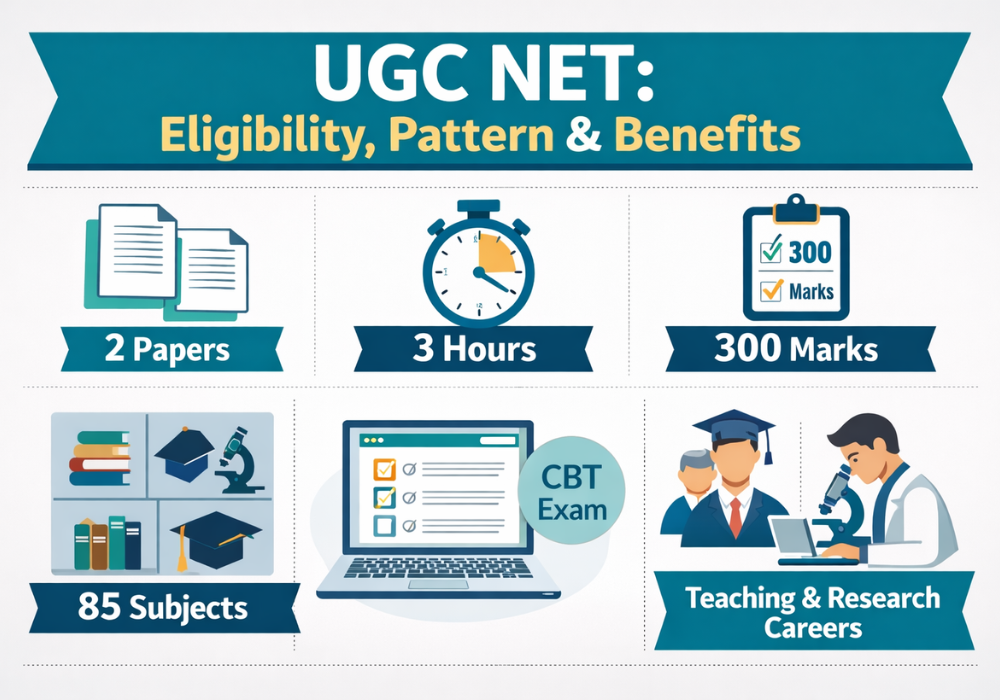
Your essential UGC NET guide covering eligibility criteria, exam pattern, Paper I and II syllabus, application process, preparation tips, and career benefits after qualifying. This article is written by Neeli Neelay Shah, Senior Legal Content Writer at LawSikho.

If you are considering an academic career in India, UGC NET is likely the most important examination on your radar. Conducted by the National Testing Agency (NTA) twice a year, this national-level test determines your eligibility for Assistant Professor positions in universities and colleges, and awards the prestigious Junior Research Fellowship (JRF) to top performers seeking funded doctoral research. Whether you are a final year postgraduate student exploring career options or a working professional planning to switch to academia, this guide gives you everything you need to understand UGC NET without drowning in information overload.

Educational Qualification 

The basic requirement for UGC NET is a Master’s degree from a recognized university in a subject relevant to your chosen Paper II. General and EWS category candidates need at least 55% marks in their postgraduate degree, while reserved category candidates (SC, ST, OBC-NCL, PwD, Third Gender) need 50% marks. If you are currently in your final year of Master’s, you can still apply and appear for the examination, though you must complete your degree with the required percentage before the deadline specified in the notification.

Download Now

The 55% or 50% calculation is based on aggregate marks across all semesters of your postgraduate programme. Distance education and open university degrees are accepted as long as the institution holds proper UGC recognition. Foreign degrees are also valid if they have been equivalence-certified by the Association of Indian Universities and for Law students it needs to be validated by the Bar Council of India. This inclusive approach ensures that qualified candidates from diverse educational pathways can pursue academic careers.

Your subject choice for Paper II should align with your postgraduate specialization. For instance, if you completed your Master’s in Law, you would typically choose Law (Subject Code 41) for Paper II. However, some candidates with interdisciplinary backgrounds may choose subjects based on their stronger preparation area, provided they have equivalent knowledge of the complete syllabus.

Age Limit for JRF and Assistant Professor

Here is where UGC NET becomes particularly attractive: there is no upper age limit for Assistant Professor eligibility. Whether you are 28 or 48, if you meet the educational qualifications, you can appear for the exam and become eligible to teach at universities and colleges across India. This policy recognizes that valuable teaching experience and subject expertise can develop at any stage of life, and opening academic careers to mature candidates enriches the higher education system.

However, for the Junior Research Fellowship component, the maximum age is 30 years for General category candidates as on the first day of January of the examination year. Reserved categories OBC-NCL, SC, ST, PwD receive a 5-year relaxation, making the limit 35 years. Women candidates across all categories get an additional 5-year relaxation. Other relaxations exist for LLM holders (+3 years), army officers and research experience (up to 5 years). 

This age limit applies only to JRF; even if you exceed the JRF age limit, you can still qualify for Assistant Professor eligibility and PhD admission eligibility. Many candidates above 30 years of age successfully clear UGC NET and build fulfilling teaching careers without the JRF component. The fellowship is attractive for its financial support during doctoral research, but it is not the only valuable outcome of clearing this examination.

Four-Year Undergraduate Programme (FYUP) Under NEP 2020

The National Education Policy 2020 has introduced a significant new eligibility pathway that reflects the restructured higher education system in India. Candidates who complete a four-year undergraduate programme with research components and score at least 75% marks are now eligible for UGC NET-JRF, even without a traditional two-year Master’s degree. This provision opens doors for students from multidisciplinary undergraduate programmes to pursue academic careers directly after their bachelor’s degree.

This pathway is particularly relevant for students enrolled in institutions implementing NEP 2020’s multidisciplinary education framework. The four-year programme typically includes a research project or dissertation component in the final year, which prepares students for the research aptitude tested in UGC NET Paper I. As more universities adopt this structure, expect to see increasing numbers of candidates using this eligibility route.

However, candidates using this pathway should note that their UGC NET Paper II subject choice should align with their major area of study during the undergraduate programme. The 75% marks requirement is also higher than the Master’s degree pathway, reflecting the expectation of strong academic performance to compensate for shorter formal education duration.

Complete UGC NET Exam Structure: Duration, Mode, and Question Distribution

UGC NET is conducted as a Computer-Based Test (CBT) in a single session of 3 hours (180 minutes). Both Paper I and Paper II are administered together without any break, and you answer a total of 150 questions worth 300 marks. The examination is held at designated test centres across India, and you can select up to four preferred cities during the application process. The NTA allots centres based on availability, so popular cities may not always be guaranteed.

The best news for test-takers is that there is no negative marking in UGC NET. Every correct answer earns you 2 marks, while wrong or unattempted questions simply carry zero marks. This means you should never leave any question blank, even if you are completely unsure about the answer. Even educated guesses have potential value since there is no penalty for incorrect responses. Attempt every single question before time runs out, using elimination techniques for questions where you can narrow down options.

The CBT interface allows you to navigate freely between Paper I and Paper II during the examination. You can mark questions for review and return to them later, switch between papers as per your comfort, and see a question palette showing your progress. Familiarizing yourself with this interface through NTA’s free mock tests available on the official portal is highly recommended before your actual examination day.

Paper I: Teaching and Research Aptitude (50 Questions, 100 Marks)

UGC NET Paper I is the common paper that every UGC NET aspirant must clear, regardless of their chosen subject. It tests your general aptitude for teaching and research careers through 50 multiple-choice questions worth 100 marks. While there is no fixed time allocation between papers, most successful candidates spend approximately 50-60 minutes on Paper I and reserve 120-130 minutes for the more extensive Paper II.

The UGC NET Paper I syllabus covers 10 comprehensive units designed to evaluate competencies essential for academic careers. Unit 1 (Teaching Aptitude) covers teaching levels, learner characteristics, and teaching methods. Unit 2 (Research Methodology) examines research types, designs, sampling, and ethics. Unit 3 (Reading Comprehension) tests analytical reading through passages. Unit 4 (Communication) covers verbal and non-verbal communication skills. Unit 5 (Mathematical Reasoning) tests numerical aptitude through series, percentages, and calculations. Unit 6 (Logical Reasoning) includes syllogisms, analogies, and deductive reasoning. Unit 7 (Data Interpretation) involves tables, charts, and graphs. Unit 8 (ICT) covers digital initiatives and technology in education. Unit 9 (Environment) examines sustainable development and environmental policies. Unit 10 (Higher Education System) tests knowledge of NEP 2020, UGC regulations, and academic reforms.

Based on previous year analysis, question distribution across units shows some consistent patterns. Teaching Aptitude and Research Methodology together contribute around 10-12 questions and form the conceptual foundation. Logical Reasoning and Data Interpretation are high-scoring units with 8-10 questions featuring predictable patterns that improve significantly with practice. ICT and Higher Education System questions often test current awareness about digital initiatives like SWAYAM and Swayam Prabha, Digital India, and education policies like NEP 2020. Understanding unit-wise weightage helps you allocate preparation time strategically for maximum impact.

UGC NET Paper II: Subject-Specific Paper (100 Questions, 200 Marks)

Paper II evaluates your in-depth knowledge of your chosen subject through 100 questions worth 200 marks. Since it carries double the weightage of Paper I, your Paper II performance largely determines your final ranking and qualification status. A strong Paper II score can compensate for an average Paper I, but the reverse is rarely true. This is where your postgraduate education and subject expertise truly come into play.

NTA offers 85 subjects for Paper II, spanning humanities, social sciences, sciences, languages, and professional disciplines. Popular high-competition subjects include English Literature, Political Science, Commerce, Education, History, Economics, Sociology, and Law. Your subject choice should align with your postgraduate specialization since questions test Master’s level knowledge across the complete syllabus. Some candidates choose subjects slightly different from their exact PG degree if they have equivalent knowledge, but this requires careful consideration of the syllabus overlap and your preparation strength.

Each Paper II subject has a detailed syllabus divided into 8-10 units covering the breadth of that discipline. The syllabus generally mirrors postgraduate curriculum content and includes both foundational theories and contemporary developments in the field. For instance, Law Paper II covers 10 units spanning Jurisprudence, Constitutional and Administrative Law, International Law and International Humanitarian Law, Criminal Law, Torts and Consumer Protection, Commercial Law, Family Law, Environmental and Human Rights Law, IPR and IT Law, and Comparative Public Law. Commerce Paper II spans Business Environment, Accounting and Auditing, Business Economics, Business Finance, Statistics and Research Methods, Management and HRM, Banking, Marketing, Legal Aspects, and Taxation. Understanding your subject’s unit structure helps you plan systematic preparation.

Marking Scheme and Qualifying Criteria

The marking scheme is refreshingly straightforward: +2 marks for every correct answer, zero marks for incorrect or unattempted questions. With 150 questions totaling 300 marks (Paper I: 50 questions for 100 marks; Paper II: 100 questions for 200 marks), your aggregate score across both papers determines your qualification status. There are no separate qualifying thresholds for individual papers; only the combined aggregate matters.

General and EWS category candidates need minimum 40% aggregate (120 marks out of 300) to qualify for Assistant Professor eligibility. Reserved category candidates (SC, ST, OBC-NCL, PwD, Third Gender) need 35% aggregate (105 marks out of 300). Meeting these minimum thresholds is necessary but not sufficient for actual qualification, as the final cut-off depends on competition levels and varies each session based on candidate performance and available positions.

For JRF, you need to score among the top performers nationally in your subject. The JRF cut-off is always significantly higher than the Assistant Professor cut-off, typically by 20-30 marks depending on the subject and session difficulty. JRF is awarded to a limited number of top scorers based on merit and available fellowship slots, making it considerably more competitive than Assistant Professor eligibility alone.

Paper I Syllabus: 10 Units

Units 1 and 2 form the conceptual foundation of Paper I and are essential for understanding academic work. Unit 1: Teaching Aptitude forms the conceptual foundation of your future teaching career. This unit covers the nature, objectives, characteristics, and basic requirements of teaching at different levels. You need to understand the three levels of teaching: Memory level (where students simply recall information), Understanding level (where students comprehend and explain concepts), and Reflective level (where students analyze, evaluate, and create new ideas). The unit also covers learner characteristics including how age, motivation, prior knowledge, and learning styles affect the learning process. Various teaching methods like lecture, discussion, demonstration, and project-based learning are tested, along with their advantages and limitations.

Unit 2: Research Aptitude evaluates your understanding of the research process from problem identification to conclusion. This unit covers types of research including fundamental research (pure research aimed at expanding knowledge), applied research (solving practical problems), and action research (improving specific practices). You should understand the differences between qualitative research, quantitative research, and mixed-methods approaches. Key concepts include variables (independent, dependent, intervening), sampling methods (probability and non-probability), hypothesis formulation, research ethics (informed consent, confidentiality, plagiarism), and thesis writing. Your postgraduate dissertation experience provides a practical foundation for this unit.

Unit 3: Reading Comprehension tests your ability to understand, analyze, and draw inferences from written passages. This unit typically presents one or more passages of 300-500 words followed by 5-6 questions. Passages cover topics from social sciences, humanities, science and technology, or current affairs. Question types include direct factual questions (answers explicitly stated in the passage), inference-based questions (drawing logical conclusions), vocabulary questions (meaning of words in context), and questions about the author’s tone, purpose, or main argument. The strategy is to read questions first, then scan the passage for relevant answers.

Unit 4: Communication covers the nature and characteristics of communication essential for effective teaching. You need to understand the basic communication model: sender, message, channel, receiver, feedback, and noise. The unit distinguishes between verbal communication (spoken and written words) and non-verbal communication (body language, gestures, facial expressions, eye contact). Different levels of communication including intrapersonal, interpersonal, group, and mass communication are covered. Classroom communication skills, barriers to effective communication (physical, psychological, semantic, cultural), and methods to overcome these barriers are frequently tested topics.

Unit 5: Mathematical Reasoning tests your numerical aptitude through number series, percentages, ratios, and basic calculations. Number series questions present sequences following hidden patterns where you must identify the next or missing number. Patterns can involve addition, subtraction, multiplication, division, squares, cubes, or combinations. Percentage questions test calculating percentages, percentage change, and converting between fractions, decimals, and percentages. This unit rewards practice, and learning mental math shortcuts significantly improves your speed and accuracy during the examination.

Unit 6: Logical Reasoning is a high-scoring unit testing your ability to think systematically and draw valid conclusions. Syllogisms are logical arguments where conclusions are drawn from two given statements, and Venn diagrams help visualize these relationships quickly. Analogies test your ability to identify relationships between pairs of concepts (synonyms, antonyms, part-whole, cause-effect, tool-user relationships). Understanding deductive reasoning (general to specific, conclusions necessarily true) versus inductive reasoning (specific to general, conclusions probable) is important. Common logical fallacies including hasty generalization, circular reasoning, and false cause are also covered.

Unit 7: Data Interpretation presents data in tables, bar graphs, line graphs, and pie charts, requiring you to analyze, compare, and draw conclusions. Questions typically involve calculating percentages, ratios, averages, or growth rates from given data. You may need to compare performance across categories or time periods, identify trends, or find maximum/minimum values. The key strategy is reading questions first to understand what information you need, then looking at the data selectively. Approximation skills are valuable since exact calculations are often unnecessary when answer options are sufficiently spread apart.

Unit 8: Information and Communication Technology (ICT) tests your familiarity with computer basics, internet technologies, and digital initiatives. The Digital India initiative and its key pillars (broadband highways, universal mobile connectivity, e-governance, e-kranti) are frequently tested. E-governance models (G2C, G2B, G2G, G2E) and DigiLocker appear regularly. Cyber security concepts including malware, phishing, hacking, and protective measures are important. ICT in education covers e-learning platforms, MOOCs, SWAYAM, NPTEL, virtual classrooms, and concepts like blended learning and flipped classroom.

Unit 9: People, Development, and Environment covers sustainable development, environmental issues, and the relationship between human activities and the natural environment. Sustainable development (meeting present needs without compromising future generations’ ability) and its three pillars (economic, social, environmental sustainability) are core concepts. The United Nations Sustainable Development Goals (SDGs) adopted in 2015 with 17 goals for 2030 are frequently tested. Environmental legislation including Environment Protection Act 1986, Wildlife Protection Act 1972, and Air and Water Pollution Acts are covered. International agreements like the Paris Agreement, Kyoto Protocol, and Convention on Biological Diversity are important topics.

Unit 10: Higher Education System in India tests your understanding of how higher education is structured and governed in India. The National Education Policy 2020 is a landmark reform document with key provisions including multidisciplinary universities, flexible curriculum with multiple entry-exit options, Academic Bank of Credits, and four-year undergraduate programmes. The University Grants Commission (UGC) functions as the primary regulatory body, and you should understand its roles in coordinating standards, providing grants, and framing regulations. NAAC accreditation (evaluating institutions on seven criteria with grades from A++ to C) and NIRF ranking parameters are important contemporary topics that appear regularly in questions.

Paper II Syllabus: Subject-Specific Coverage

Paper II syllabus is structured around postgraduate-level content divided into 8-10 units depending on the subject, with each unit covering a major domain within the discipline. The depth of coverage mirrors what you would study during a Master’s programme, including both foundational theories and contemporary developments. For Law, the 10 units comprehensively cover Jurisprudence (schools of thought, legal concepts), Constitutional and Administrative Law (fundamental rights, federalism, judicial review), Public International Law and International Humanitarian Law, Law of Crimes (general principles, specific offences under new criminal laws), Torts and Consumer Protection, Commercial Law (contracts, company law, negotiable instruments), Family Law (personal laws across communities), Environmental and Human Rights Law, IPR and IT Law, and Comparative Public Law examining different governance systems.

Commerce Paper II similarly spans 10 units covering the business and commerce discipline comprehensively. Business Environment and International Business examines globalisation, trade policies, and business ethics. Accounting and Auditing (the highest-weightage unit with 12-15 questions) covers financial, cost, and management accounting plus auditing standards. Business Economics includes demand-supply analysis, market structures, and macroeconomic concepts. Business Finance covers capital budgeting, capital structure theories, and working capital management. Statistics and Research Methods tests quantitative techniques and research design. Business Management and HRM examines management theories and HR functions. Banking and Financial Institutions covers RBI, monetary policy, and financial markets. Marketing Management includes consumer behaviour and digital marketing. Legal Aspects covers commercial legislation, and Taxation addresses income tax and corporate tax planning.

The official subject-wise syllabus PDFs are available for download on the UGC NET Online portal in both English and Hindi. Syllabi are periodically updated to reflect current academic developments in respective fields, so ensure you have the latest version and check for any recent modifications announced through NTA notifications.

Paper I: Prepare for Teaching and Research Aptitude

Paper I preparation should begin with understanding each unit’s content, weightage, and question patterns. Teaching Aptitude and Research Methodology require conceptual clarity since questions test understanding of principles rather than mere factual recall. Create summary notes for key theories, their proponents, and distinguishing characteristics. Flashcards work well for matching questions that ask you to connect theories with theorists or concepts with definitions.

Logical Reasoning and Mathematical Reasoning improve dramatically with daily practice. Dedicate 30-45 minutes daily to solving reasoning problems, focusing on speed and accuracy. For syllogisms, master the Venn diagram approach that allows quick visualization of statement relationships. For number series, learn to recognize common patterns (addition, multiplication, squares, cubes, alternating operations) through extensive practice. Data Interpretation similarly rewards regular practice with tables and graphs from previous year papers.

For units like ICT and Higher Education System, maintain a current affairs file with recent policy announcements, digital initiatives, and education reforms. NEP 2020 provisions appear frequently, so read the policy document’s key highlights including multidisciplinary education, Academic Bank of Credits, four-year undergraduate programmes, and regulatory reforms. Environment questions often reference Sustainable Development Goals and international agreements, which can be prepared through concise summaries rather than extensive reading. Subscribe to education news sources or follow UGC and Ministry of Education social media for updates on recent developments.

Paper II: Leverage Your Academic Background

Your postgraduate coursework provides a strong foundation for Paper II preparation, and recognizing this can save significant preparation time. Map your Master’s syllabus systematically against the UGC NET syllabus to identify areas already covered during your degree versus those needing fresh study. For topics you studied during your PG, revision from your existing notes and previous year question practice may suffice rather than starting from scratch with new textbooks.

Focus preparation time proportionate to unit weightage based on previous year paper analysis. In Commerce, Accounting and Auditing contributes 12-15 questions (24-30 marks) while smaller units like Business Environment may have 6-8 questions. In Law, Constitutional Law and Jurisprudence are heavily weighted compared to units like Comparative Public Law. Prioritize high-weightage units for thorough preparation while ensuring basic coverage of all topics to avoid leaving any unit completely unprepared.

Create subject-specific notes as you study rather than just reading passively. Active note-making significantly improves retention and provides quick revision material during the final weeks. Mind maps work exceptionally well for interconnected concepts, helping you visualize relationships and recall information during the examination. Include key case laws (for Law), important theorists and their contributions, formulas (for Commerce numericals), and potential MCQ areas in your notes.

Using Previous Year Papers and Mock Tests Smartly

Previous year papers are your most valuable preparation resource, more useful than any textbook or coaching material. They reveal actual question patterns, difficulty levels, topic emphasis, and question framing styles that you will encounter in the examination. Many questions or their close variations repeat across sessions, making PYQ practice directly scoring. Solve at least 5 years of papers thoroughly, analyzing not just correct answers but also understanding why other options are incorrect.

Begin full-length mock tests approximately 6-8 weeks before the examination date. Simulate actual exam conditions with 3-hour timed sessions without breaks, using the CBT format if possible. Analyze each mock test thoroughly to identify weak areas, track your progress over time, and refine your time management strategy. Note patterns in your mistakes: are they conceptual gaps, careless errors, or time management issues? Address each type differently. Aim for 15-20 full-length mock tests before the actual examination to build stamina and exam temperament. Additionally, many coaching platforms and publishers offer subject-specific mock tests. The key is consistent practice with honest analysis rather than simply accumulating test numbers without learning from mistakes.

The application process is entirely online through the NTA portal at ugcnet.nta.ac.in. The process begins with registration, where you provide basic details including your name (exactly as it appears on official documents), date of birth, mobile number, and email address. Upon successful registration, the system generates a unique application number and password that you must save securely, as these credentials are required for all subsequent interactions including application completion, admit card download, and result checking.

After registration, log in to complete the full application form with detailed personal information, educational qualifications, and examination preferences. Personal details include your complete address, identification information, and category certificates if applicable. Educational details require information about your qualifying degree including university name, year of passing, subjects studied, and percentage obtained. Ensure complete accuracy in these details as discrepancies can lead to application rejection or certificate cancellation after qualification.

Document uploads require careful attention to exact specifications mentioned in the Information Bulletin. Your photograph must be a recent passport-sized colour image with white or light background, in JPEG format between 10-200 KB, taken within the last 3 months. Your signature should be in running handwriting (not block letters) with black ink on white paper, in JPEG format between 4-30 KB. Reserved category candidates must upload valid category certificates in the prescribed format. PwD candidates require disability certificates from authorized medical boards specifying at least 40% disability. Rejection due to document specification violations is common, so verify requirements carefully before uploading.

Examination preferences include selecting your Paper II subject (which cannot be changed after submission), preferred examination cities (up to four choices), and medium of examination (English or Hindi for most subjects). Subject selection is particularly critical since it determines your entire Paper II and cannot be modified even during the correction window. Choose carefully after confirming the subject code from the official Information Bulletin matches your intended subject.

Application Fee 

The application fee structure for UGC NET is category-based to ensure accessibility across economic backgrounds. For UGC NET Exam, General/Unreserved candidates pay ₹1,150, OBC-NCL candidates pay ₹600, and SC/ST/PwD/Third Gender candidates pay ₹325. The fee is non-refundable under any circumstances once paid, so ensure you meet all eligibility criteria and have decided firmly on your subject before completing payment.

Payment can be made through multiple online modes including credit cards, debit cards, net banking, UPI, and digital wallets. The payment gateway is secure with instant confirmation. Keep your device charged and ensure stable internet connectivity during the payment process to avoid transaction failures. After successful payment, download and save the payment confirmation receipt immediately as proof of completed application.

UGC NET follows the Government of India’s reservation policy for cut-off determination and JRF allocation. The reservation percentages are: SC (15%), ST (7.5%), OBC-NCL (27%), and EWS (10%). PwD candidates receive 5% horizontal reservation across all categories, meaning a PwD candidate belonging to SC category benefits from both SC vertical reservation and PwD horizontal reservation. These reservations apply primarily to JRF award and merit ranking, ensuring equitable representation in research fellowships across social categories.

For qualification, reserved category candidates benefit from relaxed minimum qualifying percentages (35% aggregate instead of 40%) and separate category-wise cut-offs. This means candidates compete primarily within their category pools for determining merit positions. Candidates must possess valid category certificates issued by competent authorities to avail reservation benefits. OBC-NCL candidates must ensure their certificates specifically include the non-creamy layer clause and are valid for the current financial year. False category claims result in disqualification and potential legal consequences.

UGC NET Result and Answer Key

UGC NET results are typically declared 6-8 weeks after the examination concludes, though this timeline can vary based on administrative factors. The NTA announces results through official notifications on its website and sends SMS and email alerts to registered contact details. Results include your raw score, qualifying status (JRF qualified, Assistant Professor eligible, PhD admission eligible, or Not Qualified), and category-wise rank for JRF qualifiers.

Before final results, NTA releases provisional answer keys along with recorded responses showing your attempted answers. This transparency allows you to calculate your approximate score and compare your responses with official answers. If you believe any answer key is incorrect based on authentic sources, you can challenge it through the online grievance system by paying Rs. 200 per question challenged. Expert committees review all challenges, and final answer keys are prepared after considering valid objections. Successful challenges result in revised answer keys benefiting all affected candidates, and your challenge fee is refunded if your objection is accepted.

UGC NET Scorecard 

The scorecard displays comprehensive information including your marks in Paper I and Paper II separately, total aggregate marks, your category, qualifying status, and all-India rank if you qualify for JRF. The scorecard also mentions the validity period of your qualification and can be downloaded from the NTA website for up to one year after result declaration.

UGC NET Cut-Off 

Cut-offs vary substantially by subject based on candidate numbers, competition intensity, and paper difficulty. Popular subjects like Commerce, English, Education, and Political Science have higher cut-offs due to large candidate pools competing for limited positions. Niche subjects may have relatively lower cut-offs but also fewer available positions and fellowships.

For June 2025, Commerce JRF cut-off was approximately 224 marks for General category, while Assistant Professor eligibility required around 194 marks. Law cut-offs typically fall in the moderate range, with JRF cut-offs between 180-200 marks for General category depending on the session. These figures vary each cycle, so treat them as indicative benchmarks rather than fixed targets.

Setting your target 15-20 marks above the previous year’s cut-off for your subject is a prudent strategy that provides a safety margin. Analyze your specific subject’s cut-off history rather than relying on general cut-off figures, and track your mock test performance against these benchmarks throughout your preparation.

Certificate Download and Validity

After result declaration, qualified candidates can download their e-certificates from the NTA website. The e-certificate is digitally signed and verifiable through the NTA verification portal, eliminating the need for physical copies in most recruitment processes. The certificate contains your name, photograph, roll number, subject, qualifying status (JRF/Assistant Professor/PhD admission), and date of qualification. Recruiters can verify certificate authenticity online using the certificate number provided.

The Assistant Professor eligibility certificate is valid for lifetime once you qualify. There is no expiry date, and you can use this qualification for university and college faculty recruitment throughout your career. However, for JRF, the fellowship award must be availed within a specified period from the result declaration date, typically three years. If you do not join a PhD programme and activate your JRF within this validity period, the fellowship offer lapses, though your Assistant Professor eligibility remains intact.

After qualifying, your next steps depend on your career goals. For Assistant Professor positions, start monitoring university and college recruitment notifications through employment news, institutional websites, and UGC’s job portal. Prepare for interviews that typically test subject knowledge, teaching demonstration skills, and research aptitude. For JRF recipients, identify universities and research supervisors in your area of interest, apply for PhD admission (NET qualifiers are often exempt from entrance tests), and complete the JRF activation process through the UGC portal after PhD enrollment to start receiving your monthly fellowship stipend.

Qualifying UGC NET opens multiple rewarding career pathways in academia and research. The most direct benefit is eligibility for Assistant Professor positions in universities and colleges across India. With UGC NET qualification, you can apply for teaching positions in central universities, state universities, deemed universities, and affiliated colleges. The starting salary for Assistant Professors under the 7th Pay Commission is approximately ₹57,700 per month (Level 10), with additional allowances like DA, HRA, and academic grade pay bringing the total compensation to ₹70,000-90,000 depending on location and institution type.

For top performers, the Junior Research Fellowship provides substantial financial support for doctoral research. JRF recipients receive a monthly stipend of ₹37,000 for the first two years, increasing to ₹42,000 per month from the third year onwards upon elevation to Senior Research Fellow (SRF) status. Additionally, JRF scholars receive House Rent Allowance (8-24% depending on city category) and an annual contingency grant for books, travel, and research expenses. This fellowship allows you to pursue a PhD without financial constraints, focusing entirely on your research work.

Beyond teaching and research, UGC NET qualification enhances your profile for various academic and administrative roles. Many research positions in government organizations, think tanks, and policy institutes prefer or require NET qualification. Educational content development roles, academic consultancy, and positions in regulatory bodies like UGC, NAAC, and AICTE often list NET as a desirable qualification. The examination also serves as validation of your subject expertise, which can be valuable for career transitions into education technology, publishing, and academic administration.

The PhD admission benefit is particularly valuable: UGC NET qualifiers are exempt from university entrance tests in most institutions, proceeding directly to interviews for doctoral admission. Some universities give significant weightage (up to 70%) to NET scores in their PhD selection process. This streamlined pathway saves preparation time for multiple entrance examinations and demonstrates your research aptitude to potential supervisors. Even if you do not plan an immediate PhD, having this option available provides career flexibility.

UGC NET is your gateway to a fulfilling academic career, whether you aspire to shape young minds as a professor or contribute to knowledge creation as a researcher. The examination is challenging but entirely conquerable with systematic preparation and strategic approach. Remember the key takeaways: meet the eligibility requirements carefully, understand the exam pattern thoroughly (no negative marking means attempt everything), prepare Paper I and Paper II with appropriate weightage, and practice extensively with previous year papers and mock tests.

Your preparation should begin now, regardless of when your target examination session is scheduled. Download the official syllabus, create a realistic study plan, and maintain consistent daily effort over months rather than intensive cramming in the final weeks. The investment you make in UGC NET preparation pays dividends throughout your academic career, opening doors to teaching positions, research opportunities, and intellectual growth. Start your journey today, stay disciplined in your preparation, and approach the examination with confidence knowing that lakhs of successful candidates before you have walked this same path to academic careers.

If you want more detailed information on this topic, please visit this blog on LawSikho.

Serato DJ Crack 2025Serato DJ PRO Crack


News
Berita Teknologi
Berita Olahraga
Sports news
sports
Motivation
football prediction
technology
Berita Technologi
Berita Terkini
Tempat Wisata
News Flash
Football
Gaming
Game News
Gamers
Jasa Artikel
Jasa Backlink
Agen234
Agen234
Agen234
Resep
Cek Ongkir Cargo
Download Film

Your essential UGC NET guide covering eligibility criteria, exam pattern, Paper I and II syllabus, application process, preparation tips, and career benefits after qualifying. This article is written by Neeli Neelay Shah, Senior Legal Content Writer at LawSikho. If you are considering an academic career in India, UGC NET is likely the most important examination on your radar. Conducted by


Learn the 5-stage NTS process, 2025 costs in INR, state selection tips, and Prometric scheduling for Indian candidates. The article is written by Medha Vinod, Senior Associate at LawSikho.

The CPA exam application process involve multiple organizations, several fee payments, and unfamiliar terminology that can overwhelm Indian candidates. This guide breaks down the entire journey into five clear stages, helping you understand exactly what to do at each step, how much it costs in Indian Rupees, and how long each phase takes. Whether you are a B.Com graduate, CA, or working professional, this roadmap will help you navigate from credential evaluation to your Prometric appointment.

The path from deciding to pursue the CPA to actually sitting in a Prometric center follows a predictable sequence of five stages. Each stage has specific requirements, timelines, and costs that you need to understand before moving forward. Knowing what comes next at each point prevents surprises and helps you plan both your time and finances effectively.

Stage 1: Credential Evaluation

Your journey begins with getting your Indian educational credentials evaluated by an approved agency. This step typically takes four to eight weeks and costs between $225 and $305 (₹18,900 to ₹25,600). You will need to gather official transcripts from your Indian university and submit them to either NIES or WES, depending on which state you plan to apply through. Start this process early because Indian universities can take two to four weeks just to process your transcript request.

Download Now

Stage 2: State Board Application

Once your credentials are evaluated, you submit your application to your chosen state board through the NASBA CPA Portal. Application fees range from $50 to $200 (₹4,200 to ₹16,800) depending on the state. After reviewing your application and evaluation report, the state board issues your Authorization to Test (ATT), which confirms you are eligible to take the exam. This stage typically takes three to six weeks from submission to ATT receipt.

Stage 3: NTS Registration and Fee Payment

With your ATT in hand, you have 90 days to pay exam section fees and receive your Notice to Schedule (NTS). Each section costs $390 (₹32,760) in exam fees. For Candidates outside the US and Canada, the fee is $510. Once you pay, NASBA generates your NTS within a few business days, which becomes your actual exam ticket. The NTS is valid for six months in most states, so only pay for sections you can realistically prepare for and take within that window.

Stage 4: International Testing Registration

Before scheduling at an Indian Prometric center, you must pay an additional international administration fee. This is paid through your NASBA candidate account by selecting “International Administration.” After payment, you must wait 24 hours before you can access the scheduling system. This brings your total per-section cost to $780 (₹65,520) for testing in India.

Stage 5: Prometric Scheduling

The final stage is booking your actual exam appointment through Prometric’s scheduling system. You can choose from eight testing centers across India: Ahmedabad, Bangalore, Kolkata, Chennai, Hyderabad, Mumbai, New Delhi, and Trivandrum. Select your preferred date and time based on seat availability, and you will receive a confirmation email with your appointment details. From start to finish, the entire five-stage process takes approximately four to six months.

US state boards cannot directly interpret Indian degrees, transcripts, or grading systems. They rely on specialized evaluation agencies to translate your academic credentials into US credit hour equivalents. This translation determines whether you meet the education requirements to sit for the exam and eventually qualify for licensure.

Understanding Credit Hour Requirements

The US education system measures academic achievement in semester credit hours, with bachelor’s degrees typically totaling 120 credits. Most states require 120 credits to sit for the CPA exam and 150 credits for full licensure. A three-year Indian B.Com degree generally evaluates to 90 to 120 US credits, which may qualify you to sit for the exam but usually falls short of the 150-credit licensure requirement.

If you hold an M.Com, an MBA in Finance, or have completed the CA qualification, your credit total will be higher. M.Com graduates typically receive 140 to 160 credits after evaluation, often meeting or exceeding the 150-credit threshold. Chartered Accountants benefit from additional professional credits that can push the total well above minimum requirements. Understanding where your specific qualification lands helps you choose appropriate states and plan for any additional coursework needed for licensure.

Choosing Your Evaluation Agency

Two agencies dominate credential evaluation for CPA candidates: NASBA International Evaluation Services (NIES) and World Education Services (WES). Your choice depends primarily on which agency your target state accepts. Some states, like Alaska, Arizona, and Georgia, only accept NIES evaluations, while others accept both agencies.

NIES charges $225 to $300, depending on service level, and offers a unique “Undecided Jurisdiction” option that recommends suitable states based on your credentials. WES charges approximately $305 for its CPA-specific evaluation package and is widely recognized across multiple professions. Before paying either agency, verify your chosen state’s requirements on their official website. Paying for an evaluation from the wrong agency means starting over and paying again, which is one of the most expensive mistakes candidates make.

Document Preparation for Indian Universities

Evaluation agencies require official documents sent directly from your institution or in sealed envelopes that you forward unopened. You will need consolidated marksheets for all years of your degree, your degree certificate or provisional certificate, and sometimes course descriptions or syllabi detailing what each subject covered.

Contact your university’s examination section or registrar’s office at least three to four weeks before you need documents. Indian universities often have bureaucratic processes that take longer than expected, and rushing this step leads to errors. If your documents are not in English, arrange for certified translations before submission. Keep copies of everything you send, and use tracked courier services when mailing documents internationally to avoid loss.

Your choice of US state affects your eligibility, costs, evaluation agency options, and long-term licensure path. Unlike the CA exam administered uniformly across India, CPA licensing is handled by 55 different state boards with varying requirements. Making an informed state choice upfront prevents complications and additional expenses later in your journey.

Key Factors for Indian Candidates

Education requirements vary significantly between states. Some states allow candidates to sit for the exam with just 120 credit hours, making them accessible to B.Com graduates. Other states require 150 credits even to take the exam, which would require additional coursework for most Indian candidates before they can apply.

Social Security Number requirements matter for international candidates. States including Colorado, Montana, Alaska, Washington, New Hampshire, and Maine do not require an SSN for exam eligibility, making them popular among Indian candidates. Most states also do not require US residency to take the exam, though some have residency requirements for final licensure. 

Application Process Overview

Start by creating an account on the NASBA CPA Portal using your email address and personal information. Your name must exactly match your passport because this information flows through to your NTS and must match your test center identification. Upload your credential evaluation report and complete the application form for your chosen state.

Submit your application along with the required fee. Some states process applications directly, while others use NASBA’s CPAES system. After submission, the state board reviews your credentials, and either approves your application or requests additional documentation. Plan for three to six weeks between submission and receiving your Authorization to Test, though processing times vary by state and time of year.

From ATT to NTS: The Critical Transition

The Authorization to Test confirms your eligibility but does not allow you to schedule an exam. Think of it as approval to proceed rather than an exam ticket. Your ATT is valid for 90 days in most states, during which you must pay exam section fees to convert it into a Notice to Schedule. Letting your ATT expire without paying fees may require reapplication and additional application fees.

Once you pay section fees through the NASBA portal, your NTS is generated within a few business days. The NTS contains your Exam Section ID, which you need for Prometric scheduling, and specifies the validity period during which you must schedule and complete your exam. Most states provide six months of NTS validity. Plan your study timeline before paying for sections; if you cannot realistically prepare for a section within six months, wait until you can rather than risking fee forfeiture.

Understanding the full cost picture prevents financial surprises and helps you plan payments across your CPA journey. Costs are spread across multiple stages rather than all at once, which provides some cash flow flexibility. However, the total investment is substantial, so budgeting accurately from the start is essential.

Fee-by-Fee Breakdown

Your credential evaluation costs $225 to $305 (₹18,900 to ₹25,600), depending on agency and service level. State board application fees will be $100. Registration fees, charged when you request an NTS, range from $40 to $200 depending on how many sections you register for at once.

Exam section fees are $510 per section, totaling $2,040 (₹1,83,600) for all four sections. Adding evaluation, application, and registration fees, expect to spend ₹2,90,000 to ₹3,20,000 on exam-related costs alone.

Additional Costs to Consider

Most candidates invest in a CPA review course to maximize their chances of passing. Courses from providers like Becker, Wiley, or Surgent range from ₹80,000 to ₹2,00,000, depending on the package and whether you access them through an Indian coaching institute. Some candidates also need bridge courses if their credit evaluation falls short of state requirements, adding another ₹20,000 to ₹50,000.

Retake fees are a significant potential expense. If you fail a section and need to retake it, you pay the full fee again for the exam and international fees. Rescheduling fees apply if you change your exam date close to your appointment. Building a buffer of 10-15% into your budget accounts for these possibilities and currency fluctuations.

Smart Budgeting Tips

Pay for one or two sections at a time rather than all four at once. This approach reduces the risk of forfeiting fees if your NTS expires before you can take all sections. While you pay a small registration fee each time you request a new NTS, this is far cheaper than losing $780 on an untaken section.

Factor in currency fluctuation by adding 5-10% to your budget calculations. The rupee-dollar exchange rate can shift significantly over your six to twelve-month CPA journey. Explore EMI options offered by many Indian coaching institutes if paying the full amount upfront is challenging. Most importantly, invest in quality preparation to pass on your first attempt. Each retake costs ₹65,520, making first-attempt success the single most effective cost-saving strategy.

With your NTS in hand and international fees paid, you are ready to book your actual exam appointment. This final stage transforms months of application work into a confirmed date and time when you will sit for the exam. Proper scheduling and exam day preparation ensure that administrative issues do not derail your testing experience.

Booking Your Exam Appointment

Access Prometric’s ProScheduler through their website after waiting 24 hours from your international fee payment. Select “Uniform CPA Exam” as your program, then enter your Exam Section ID from your NTS along with the first four letters of your last name. The system will show available appointments at testing centers based on your international registration.

Choose from the eight Indian Prometric centers based on availability and convenience: Ahmedabad, Bangalore, Kolkata, Chennai, Hyderabad, Mumbai, New Delhi, and Trivandrum. Select a date that allows adequate preparation time while leaving a buffer before your NTS expires. Consider score release dates if you want results before scheduling subsequent sections. Popular testing dates fill up quickly, especially around quarter-ends, so book as early as your study timeline allows.

Rescheduling Rules and Fees

Life circumstances change, and Prometric allows rescheduling with varying fees based on notice provided. If you reschedule more than 61 days before your exam, there is no fee. Otherwise, it costs $35. Changes made between 24 hours and 5 days before exam day cost $84.84.

If you are within 24 hours of your appointment or fail to appear, you forfeit all fees for that section and must pay again to register. This includes both the exam section fee and the international fee. If you realize you are not ready, reschedule early rather than hoping you will catch up.

Critical Checklist Before Exam Day

Your passport is your primary identification at the test center, and the name on it must exactly match the name on your NTS. Even minor variations like “Kumar” versus “K.” can cause problems. Verify this match well before exam day and contact your state board immediately if corrections are needed.

Bring a printed or digital copy of your NTS, as you cannot test without it. Know your test center address and plan your route, accounting for traffic and allowing time for security procedures. Save your confirmation number in multiple places: email, phone, and written backup. Arrive at least 30 minutes before your scheduled time to complete check-in procedures without rushing. The exam itself is challenging enough; eliminating administrative stress lets you focus entirely on demonstrating your knowledge.

The CPA application journey from India involves five distinct stages spanning four to six months and costing approximately ₹3 to ₹5.5 lakhs, depending on coaching choices. Start with credential evaluation and state research, as these decisions impact everything that follows. Your evaluation determines your credit hours, which affects state eligibility. Your state choice determines evaluation agency requirements, fees, and NTS validity periods.

Pay for exam sections strategically, keeping NTS validity in mind. Most working professionals benefit from registering for one or two sections at a time rather than all four at once. This approach reduces financial risk and allows you to adjust your timeline based on how preparation progresses. Build buffer time into your schedule for unexpected delays in any stage.

With proper planning and realistic timeline expectations, the application process becomes manageable rather than overwhelming. Thousands of Indian candidates navigate this path successfully each year, securing positions in Big Four firms, advancing in multinational corporations, and building rewarding global finance careers. Your CPA journey begins with understanding the roadmap, and now you have it.

For more details on the application process for CPA Exam, visit this link.

Serato DJ Crack 2025Serato DJ PRO Crack


News
Berita Teknologi
Berita Olahraga
Sports news
sports
Motivation
football prediction
technology
Berita Technologi
Berita Terkini
Tempat Wisata
News Flash
Football
Gaming
Game News
Gamers
Jasa Artikel
Jasa Backlink
Agen234
Agen234
Agen234
Resep
Cek Ongkir Cargo
Download Film
Learn the 5-stage NTS process, 2025 costs in INR, state selection tips, and Prometric scheduling for Indian candidates. The article is written by Medha Vinod, Senior Associate at LawSikho. The CPA exam application process involve multiple organizations, several fee payments, and unfamiliar terminology that can overwhelm Indian candidates. This guide breaks down the entire journey into five clear stages, helping


Understand CPA exam sections, question types, and fees for Indian candidates. Learn about Core and Discipline sections, pass rates, and how to choose your specialization strategically. This article is written by Medha Vinod, Senior Associate at LawSikho.

The CPA exam consists of four sections that you must pass within 30 months to earn your credential. Three of these are mandatory Core sections covering audit, accounting, and taxation, while the fourth is a Discipline section you choose based on your career direction. This guide cuts through the complexity to explain exactly how the exam works, what each section tests, and the strategic decisions that will shape your CPA journey as an Indian professional.

The CPA exam operates under a framework called “Core plus Discipline” that launched in January 2024 through the CPA Evolution initiative. This structure replaced the old four-section model, where everyone took identical exams. Now you’ll complete three mandatory Core sections testing foundational knowledge, then choose one Discipline section that aligns with where you want to take your career. Understanding this framework is your first step toward strategic exam planning.

Three Core Sections: AUD, FAR, and REG

Every CPA candidate globally must pass the same three Core sections regardless of specialization or career goals. 

  1. Auditing and Attestation (AUD) tests your knowledge of audit procedures, professional responsibilities, and attestation standards under US frameworks.
  2. Financial Accounting and Reporting (FAR) covers extensive US GAAP requirements, financial statement preparation, and governmental accounting. 
  3. Taxation and Regulation (REG) addresses US federal taxation for individuals and entities, along with business law fundamentals.

These Core sections ensure every licensed CPA possesses essential competencies that employers and clients expect. For you as an Indian candidate, this means encountering both familiar territory and entirely new material. Your accounting background provides advantages in FAR and AUD conceptually, though the specific standards differ from Indian practices. REG will likely require the most new learning since the US federal tax law shares virtually nothing with Indian taxation.

The Core sections now offer continuous testing throughout 2025, meaning you can schedule them any day Prometric centers operate. This flexibility lets you test when your preparation reaches exam-ready status rather than waiting for specific windows. You’ll receive scores within 1-2 weeks of testing, dramatically faster than the old quarterly release schedule.

Three Discipline Options: BAR, ISC, and TCP

After completing Core sections, you’ll select one Discipline from three options: 

  1. Business Analysis and Reporting (BAR), 
  2. Information Systems and Controls (ISC), or 
  3. Tax Compliance and Planning (TCP). 

Each Discipline extends one Core section into advanced territory, allowing you to specialize based on career direction.

BAR builds on FAR with complex accounting topics, financial statement analysis, and data analytics applications. It suits candidates pursuing audit practice, corporate financial reporting, or investment analysis roles. ISC extends AUD into IT audit, cybersecurity controls, and SOC attestation engagements, appealing to those targeting technology risk advisory or IT audit careers. TCP deepens REG content with advanced tax compliance and planning strategies, ideal for cross-border tax practice or transfer pricing roles.

Unlike Core sections, Disciplines operate on quarterly testing windows in 2025. You can only take BAR, ISC, or TCP during specific months: January, April, June, July, and October. Missing a window means waiting weeks for the next opportunity, so plan your preparation timeline accordingly.

Each CPA section runs four hours and combines two question formats: multiple choice questions (MCQs) and task-based simulations (TBSs). The specific content, question counts, and weightings vary across sections. Knowing what each section covers helps you assess how your existing knowledge transfers and where you’ll need focused preparation.

Auditing and Attestation (AUD) Content and Format

AUD tests the complete audit cycle from planning through reporting. You’ll demonstrate understanding of risk assessment procedures, evidence gathering techniques, internal control evaluation, and the auditor’s reporting responsibilities. The section covers US Generally Accepted Auditing Standards, PCAOB requirements for public company audits, and attestation engagements beyond traditional audits.

Content is divided into four areas: Ethics and Professional Responsibilities (15-25%), Assessing Risk and Developing Responses (25-35%), Performing Procedures and Obtaining Evidence (30-40%), and Forming Conclusions and Reporting (10-20%). The evidence-gathering area carries the heaviest weight, testing your ability to execute audit procedures appropriately.

AUD includes 78 MCQs and 7 TBSs, each contributing 50% to your score. The high MCQ count means you’ll average about 1.2 minutes per question, requiring efficient pacing. Current pass rates hover around 48%, placing AUD in the middle difficulty range. If you’ve worked in audit roles in India, many concepts will feel familiar, though US-specific standards require dedicated study.

Financial Accounting and Reporting (FAR) Content and Format

FAR represents the most content-heavy section, covering broad US GAAP requirements across nearly every accounting topic. You’ll need strong knowledge of financial statement preparation, complex transactions, and specialized areas like governmental and not-for-profit accounting. The section tests both conceptual understanding and technical application of accounting standards.

Content spans three major areas: Financial Reporting (30-40%), Select Balance Sheet Accounts (30-40%), and Select Transactions (25-35%). These areas cover everything from basic financial statement presentation to complex topics like business combinations, derivatives, and segment reporting. Governmental accounting, which has no direct Indian equivalent, accounts for meaningful FAR content.

FAR has only 50 MCQs alongside 7 TBSs, the lowest MCQ count among all sections. This means each question carries more weight, and the simulations demand strong technical skills. With a pass rate around 42-43%, FAR challenges even well-prepared candidates. Your Indian accounting background helps conceptually, but transitioning from Ind AS to US GAAP requires significant adjustment.

Taxation and Regulation (REG) Content and Format

REG covers US federal taxation and business law, areas where your Indian knowledge provides essentially no advantage. The section tests individual taxation, entity taxation, property transactions, and professional ethics alongside contract law, agency relationships, and business structures under US legal frameworks.

Content divides into five areas: Ethics and Tax Procedures (10-20%), Business Law (15-25%), Property Transactions (5-15%), Individual Taxation (23-32%), and Entity Taxation (23-33%). The individual and entity taxation areas together represent over half of your exam, requiring a solid understanding of US tax code provisions, calculations, and compliance requirements.

REG includes 72 MCQs and 8 TBSs, the highest simulation count among all sections. The 50/50 weighting means simulations carry substantial impact, often requiring multi-step tax calculations. Despite being entirely new material for most Indian candidates, REG’s pass rate of approximately 63-64% reflects its logical structure that rewards systematic study. Approach it as fresh learning rather than trying to map Indian tax concepts.

Discipline Section Content Overview

Your Discipline choice extends one Core section’s content into a specialized territory. BAR covers advanced accounting topics (40-50%), technical accounting and reporting (35-45%), and state/local government accounting (10-20%). With 50 MCQs and 7 TBSs weighted 50/50, BAR matches FAR’s format but with advanced content that produces pass rates around 41-43%.

ISC focuses on Information Systems and Data Management (35-45%), Security, Confidentiality, and Privacy (35-45%), and SOC Engagement Considerations (15-25%). Its unique 82 MCQs and 6 TBSs with 60/40 weighting toward MCQs suits candidates comfortable with technology concepts who can move quickly through questions. ISC’s pass rate of approximately 68% reflects growing familiarity with this content area.

TCP addresses Individual Tax Compliance and Planning (30-40%), Entity Tax Compliance (30-40%), Entity Tax Planning (10-20%), and Property Transactions (10-20%). With 68 MCQs and 7 TBSs weighted 50/50, TCP closely aligns with the REG format and content. Its pass rate of 75-78%, the highest among all sections, reflects strong candidate self-selection from those who performed well on REG.

Understanding how the CPA exam tests you and calculates your score helps set realistic expectations. The exam uses two question formats delivered in testlets, with a scoring system that differs fundamentally from percentage-based grading you may know from Indian examinations.

MCQs and Task-Based Simulations Explained

Multiple choice questions present four answer options where you select the single best response. MCQs test recall, understanding, and application of concepts across the section content areas. The exam uses adaptive testing for MCQs: your first testlet contains medium-difficulty questions, and based on your performance, your second testlet adjusts to either medium or higher difficulty. Receiving harder questions signals a strong initial performance and doesn’t disadvantage your score.

Task-based simulations test practical application through realistic work scenarios. You’ll analyze documents, perform calculations using spreadsheet tools, research authoritative guidance, and make professional judgments. TBS formats include document review, calculation problems, form completion, and research tasks where you locate specific guidance within the FASB Codification or Internal Revenue Code.

There’s no negative marking on either format, so answer every question even when guessing. MCQs contribute 50% of your score in most sections (60% in ISC), while TBSs contribute the remaining 50% (40% in ISC). Both formats require practice to develop familiarity with the exam interface and question styles.

CPA Pass Mark and Scaled Scoring

You need a minimum scaled score of 75 on a 0-99 scale to pass each section. This 75 is not a percentage correct; it’s a scaled score derived from your raw performance adjusted for question difficulty. According to AICPA’s official scoring methodology, the scaling ensures consistent standards across different test forms and dates, meaning the exam isn’t harder or easier at different times.

Your total score combines weighted scaled scores from MCQs and TBSs according to section-specific allocations. Harder questions contribute more to your score than easier ones, which is why adaptive testing that assigns harder MCQs to strong performers actually benefits those candidates. If you fail, you’ll receive a Candidate Performance Report showing strengths and weaknesses by content area.

The 75 passing standard has remained consistent for decades. Roughly half of all test-takers pass on any given attempt, though this varies by section. Your goal isn’t to achieve a high score above 75; passing with 76 earns the same credential as passing with 95.

Time Management Across Different Sections

You have 240 minutes (four hours) per section, with an optional 15-minute break after completing both MCQ testlets. The break doesn’t count against your time. Effective time allocation varies based on each section’s question counts and your personal strengths.

Sections with fewer MCQs (FAR and BAR at 50 each) allow approximately 1.5-1.8 minutes per question, while sections with more MCQs (ISC at 82) require faster pacing around 1.0-1.1 minutes each. Plan to spend roughly 45-50% of your time on MCQs and 50-55% on TBSs as a starting framework.

For simulations, budget 15-25 minutes each, depending on complexity. Some require straightforward calculations; others demand extensive document analysis. If time runs short, answer all remaining MCQs (no penalty for guessing) and attempt all TBSs at least partially since they offer partial credit for correct components.

Practical logistics significantly impact your CPA journey. Understanding when you can test, what it costs in Indian Rupees, and how to navigate Prometric booking helps you plan realistically and avoid surprises.

Continuous Testing vs Quarterly Windows

Core sections (AUD, FAR, REG) now offer continuous testing throughout 2025. You can schedule these exams on any day Prometric centers operate, excluding brief maintenance blackouts. This flexibility means testing when your preparation reaches exam-ready status rather than aligning with arbitrary calendar windows. Core section scores typically release within 1-2 weeks of testing.

Discipline sections (BAR, ISC, TCP) operate differently with quarterly testing windows. In 2025, these windows fall in January, April, June, July, and October. Miss a window, and you’ll wait weeks or months for the next opportunity. Discipline scores take 6-8 weeks to release after each window closes, requiring patience before knowing your results.

This distinction matters for planning. You can complete Core sections at your own pace year-round, but you must align Discipline preparation with fixed calendar windows. Many candidates complete all three Core sections first, then target a specific Discipline window for their final exam.

Current CPA Fee Structure

In June 2025, NASBA increased exam fees for international candidates testing outside the United States. The fee per section jumped from $390 to $510, a 31% increase. At current exchange rates of approximately ₹90 per dollar, this translates to roughly ₹45,900 per section or ₹1,83,600 for all four sections in exam fees alone.

Beyond exam fees, you’ll pay evaluation fees ($250 through NIES), state application fees ($90-150), registration fees ($93 per section), and international administration fees. The complete investment ranges from approximately ₹2.8 lakhs to ₹5.5 lakhs, depending on review course choices and whether you pass all sections on first attempts.

Prometric Centers and Booking Process in India

India hosts eight Prometric testing centers: Ahmedabad, Bangalore, Chennai, Hyderabad, Kolkata, Mumbai, New Delhi, and Trivandrum. This distribution means most candidates can find a center within a reasonable distance, though availability varies by location and date.

After receiving your Notice to Schedule (NTS) from your state board, you must pay the international administration fee through your NASBA account before Indian testing locations appear in the Prometric system. Complete this payment at least one week before you plan to book to allow processing time.

Schedule 30-45 days before your target exam date to secure preferred time slots. Mumbai and Bangalore centers fill quickly, so book earlier for these locations. Your NTS is valid for six months, so time your application appropriately; applying too early wastes validity before you’re ready, while applying too late risks scheduling conflicts.

Your Discipline selection represents the most important strategic decision in your CPA journey. Unlike Core sections, where everyone covers identical material, your Discipline signals your specialization and shapes the knowledge you’ll carry into your career.

Matching Discipline Selection to Career Goals

Choose based on where you want your career to go rather than optimizing for pass rates. BAR suits careers requiring deep financial analysis and reporting expertise: Big 4 assurance practice, corporate accounting at US multinationals, financial advisory, or investment analysis. If you’re targeting roles involving complex US GAAP judgments and financial statement preparation, BAR provides directly relevant credentials.

ISC targets careers in technology risk, IT audit, cybersecurity consulting, or SOC attestation work. India’s prominence in IT services and expanding global capability centers creates strong demand for professionals bridging accounting and technology. If you currently work in IT audit or have a technology background alongside accounting qualifications, ISC leverages your existing knowledge.

TCP serves careers in tax compliance, tax planning, or cross-border advisory. The growing population of NRIs, Indian businesses expanding to US markets, and US companies with Indian operations create sustained demand for professionals who understand both tax systems. If you’re building expertise in international taxation or transfer pricing, TCP provides essential credentials.

How an Indian Professional Background Influences Your Choice

Your existing qualifications and experience should inform your Discipline decision. CA holders with audit experience often gravitate toward BAR or ISC, depending on whether their interest lies in advanced accounting or technology controls. Those working in tax roles or with a genuine interest in taxation find TCP a natural extension of REG preparation.

Consider your REG performance when evaluating TCP. The sections share substantial content, and strong REG performance often predicts TCP success. Similarly, strong FAR performance may indicate readiness for BAR’s advanced accounting topics. If you struggled with particular Core sections, the related Discipline may compound those challenges.

Don’t chase pass rates. TCP’s 78% rate doesn’t make it objectively easy; it means candidates choosing TCP tend to have relevant backgrounds and interests. A candidate who excelled at FAR but struggled with REG would likely find BAR more manageable than TCP despite the pass rate differential. Select the Discipline that aligns with your strengths and career trajectory.

The CPA exam’s Core plus Discipline structure provides a clear pathway to certification while allowing specialization that matches your career goals. You’ll complete three mandatory Core sections covering audit, accounting, and taxation fundamentals, then choose one Discipline reflecting your professional direction. Each section runs four hours, combining MCQs and TBSs that require both content knowledge and practical application skills.

As an Indian professional, approach this journey strategically. Understand that pass rates ranging from 42% for FAR to 78% for TCP reflect candidate preparation and self-selection rather than inherent difficulty. Budget ₹2.8-5.5 lakhs, depending on your choices. Leverage the eight Prometric centers across India and the 30-month completion window that accommodates working professionals. Most importantly, choose your Discipline based on where you want your career to go, not which section appears easiest on paper. With a clear understanding of what lies ahead and thoughtful planning, you can join the growing community of Indian CPAs advancing their careers through this globally recognized credential.

For information on CPA Exam Details, visit this link.

Serato DJ Crack 2025Serato DJ PRO Crack


News
Berita Teknologi
Berita Olahraga
Sports news
sports
Motivation
football prediction
technology
Berita Technologi
Berita Terkini
Tempat Wisata
News Flash
Football
Gaming
Game News
Gamers
Jasa Artikel
Jasa Backlink
Agen234
Agen234
Agen234
Resep
Cek Ongkir Cargo
Download Film

Understand CPA exam sections, question types, and fees for Indian candidates. Learn about Core and Discipline sections, pass rates, and how to choose your specialization strategically. This article is written by Medha Vinod, Senior Associate at LawSikho. The CPA exam consists of four sections that you must pass within 30 months to earn your credential. Three of these are mandatory


US CPA exam guide for Indians: Learn exam structure under 2024 CPA Evolution, eligibility requirements, complete costs in INR, and application process from India. This article is written by Rohit Arora, Senior Associate at LawSikho.

The US CPA exam is the qualifying examination that opens doors to one of the world’s most respected accounting credentials, and Indian professionals are increasingly recognizing its value. 

Whether you’re a working accountant at a Big 4 firm, a CA looking to add global credentials, or a commerce graduate planning an international career, understanding what this exam involves is your first step toward making an informed decision about pursuing it from India.

The CPA exam underwent a major overhaul in January 2024 when the AICPA introduced CPA Evolution, replacing the previous four-section format with a new Core plus Discipline model. 

This restructuring reflects the changing demands of the accounting profession and gives candidates the flexibility to specialize in areas aligned with their career goals. If you’re researching the CPA exam today, everything you read about the old BEC section is now outdated.

Three Core Sections Every Candidate Must Pass

Every CPA candidate must clear three mandatory core sections regardless of their chosen specialization. These sections test the foundational competencies that all CPAs need, from auditing procedures to financial reporting and taxation. 

The three core sections are: 

  • Auditing and Attestation (AUD), 
  • Financial Accounting and Reporting (FAR), and 
  • Taxation and Regulation (REG).

AUD focuses on audit planning, evidence gathering, and professional ethics, containing 78 multiple-choice questions and 7 task-based simulations within a 4-hour window. FAR covers US GAAP, governmental accounting, and nonprofit reporting with 50 MCQs and 7 simulations. REG tests US federal taxation and business law concepts through 72 MCQs and 8 simulations. Each section requires a score of 75 or higher on a 0-99 scale to pass.

For Indian candidates, FAR and REG typically present the steepest learning curves. FAR requires mastering US GAAP, which differs significantly from Indian Accounting Standards in areas like lease accounting and revenue recognition. REG introduces an entirely new body of knowledge since US tax law has no overlap with Indian taxation. However, candidates with IFRS exposure often find FAR somewhat familiar due to convergence between US GAAP and international standards.

Choosing Your Discipline Section: BAR, ISC, or TCP

Beyond the three core sections, you must select one discipline section that allows for specialization. Your options are Business Analysis and Reporting (BAR), Information Systems and Controls (ISC), and Tax Compliance and Planning (TCP). This choice should reflect both your career aspirations and your existing strengths.

BAR extends the financial accounting knowledge tested in FAR, covering advanced topics like derivatives, business combinations, and managerial accounting concepts. It suits candidates targeting financial analysis, controllership, or CFO-track roles. ISC focuses on IT governance, cybersecurity, and system controls, making it ideal for those interested in IT audit or technology consulting. TCP builds on REG’s tax foundation with advanced planning concepts and is popular among candidates pursuing tax advisory careers.

The pass rate data from 2024–2025 shows clear patterns across discipline sections. TCP consistently records the highest pass rates, ranging from approximately 72 to over 80 percent, reflecting the fact that many candidates opting for TCP already have strong tax backgrounds and have cleared REG. 

ISC sits in the mid-to-high range, improving from around 58 percent in 2024 to nearly 68 percent in 2025, while BAR has proven the most challenging discipline, with pass rates hovering around 40 to 42 percent. However, choosing a discipline based solely on pass rates is unwise; candidates should select the option that best aligns with their professional experience and long-term career goals.

Exam Duration, Question Types, and Scoring

Each CPA exam section runs exactly four hours, giving you 16 total testing hours across all four sections. The exam format combines multiple-choice questions (MCQs) with task-based simulations (TBSs), and understanding how these are weighted helps you allocate preparation time effectively.

MCQs test your knowledge, recall, and conceptual understanding through four-option questions with no negative marking. TBSs are scenario-based questions requiring you to analyze documents, perform calculations, or complete practical tasks like journal entries and reconciliations. For most sections, MCQs and TBSs each contribute 50 percent to your final score. The exception is ISC, where MCQs carry 60 percent weight.

Your final score uses a scaled methodology that accounts for question difficulty. A score of 75 represents the minimum competency standard, not 75 percent correct answers. The AICPA uses psychometric scaling to ensure scores are comparable across different test forms and testing windows. This means a 75 earned in January holds the same meaning as a 75 earned in August.

Before investing time and money into CPA preparation, you need to confirm that you meet the eligibility requirements. Unlike Indian professional exams with standardized national criteria, CPA eligibility varies by US state, and Indian candidates must navigate this complexity carefully. The good news is that several states have requirements specifically accommodating international candidates.

The 150 Credit Hour Rule and Indian Degree Equivalence

US states measure educational qualifications in semester credit hours, with most requiring 150 credits for CPA licensure. The standard conversion assigns approximately 30 credits per year of Indian university education. This means a three-year B.Com translates to roughly 90 credits, while adding a two-year M.Com brings you to approximately 150 credits.

If you hold only a B.Com, you’ll likely need additional coursework or credentials to meet eligibility. Many states allow candidates to sit for the exam with 120 credits (enough for B.Com plus one year of postgraduate study) and complete the remaining 30 credits before licensure. Indian Chartered Accountants typically receive 30 to 40 additional credits for their CA designation during evaluation, which can bridge the gap effectively.

The key is understanding that credit requirements have two thresholds: one for exam eligibility (usually 120 credits) and another for licensure (usually 150 credits). Planning your pathway requires knowing which threshold you currently meet and what additional education you might need.

States That Accept Indian Candidates Without SSN

Not every US state accepts international candidates, and some require a Social Security Number that Indian residents don’t have. Fortunately, several states have removed this barrier, making them popular choices for Indian CPA aspirants. Montana, Colorado, Washington, Alaska, and Guam are the most commonly chosen jurisdictions.

Montana consistently ranks as the top choice among Indian candidates due to its straightforward requirements and efficient processing. The state doesn’t require US residency, accepts international credentials without excessive documentation hurdles, and processes applications relatively quickly. Colorado and Washington offer similar accessibility with slightly different fee structures and experience requirements for eventual licensure.

When selecting your state, consider factors beyond just exam eligibility. Look at the experience requirements for licensure, CPE requirements for license renewal, and whether the state participates in mobility agreements that let you practice elsewhere. Your state choice is a long-term decision, not just a tactical move for exam access.

Credential Evaluation Through WES and NIES

Every international candidate must have their educational credentials evaluated by an approved agency before applying. This evaluation translates your Indian degrees into US credit hour equivalents that state boards can understand. The two most popular agencies for Indian candidates are World Education Services (WES) and NASBA International Evaluation Services (NIES).

WES is the most widely recognized evaluation agency globally, charging $200 to $300 depending on the services you select. They require official transcripts sent directly from your universities in sealed envelopes, along with degree certificates and mark sheets. Processing typically takes 4 to 6 weeks after all documents arrive. NIES, operated by NASBA itself, offers the advantage of seamless integration with the CPA application process and charges $225 to $275.

Start the evaluation process early because document collection from Indian universities can be time-consuming. You’ll need official transcripts, degree certificates, and mark sheets from every institution you attended. If you’re a CA, include documentation from ICAI confirming your membership and qualification status.

The financial investment for CPA certification is substantial, and Indian candidates face higher costs than their American counterparts due to international testing surcharges. Understanding the complete cost picture helps you budget appropriately and avoid unpleasant surprises midway through your journey.

Section-wise Exam Fees Including International Testing Charges

NASBA implemented a fee increase in 2025 that significantly impacted international candidates. The base examination fee is approximately $262.64 per section, but Indian candidates must also pay an international administration fee of $390 per section. This brings your total examination cost to roughly $510 to $520 per section, translating to approximately ₹43,000 at current exchange rates.

For all four sections, your examination fees alone will total approximately $2,040 to $2,080, or roughly ₹1,71,000 to ₹1,75,000. These fees are paid through the NASBA CPA Central portal after your application receives approval and before you can schedule your exam date. It’s crucial to understand that these fees are non-refundable if you fail to appear for your exam or let your Notice to Schedule expire.

The 2025 fee increase represented a significant jump from previous years. If you’re reading older articles quoting lower fees, those figures are outdated. Always verify current fees directly with NASBA or your state board before budgeting.

Application, Evaluation, and Review Course Costs

Beyond examination fees, several other expenses add to your total investment. Application fees vary by state, typically ranging from $40 to $200. Credential evaluation through WES or NIES costs $200 to $300. You may also pay ₹500 to ₹2,000 to your Indian universities for official transcript services.

The highest variable cost is your review course investment. Quality CPA review programs from providers like Becker, Wiley, Surgent, and Gleim range from $1,000 to $4,000 (approximately ₹84,000 to ₹3,36,000). Indian coaching institutes offering CPA preparation typically charge ₹80,000 to ₹1,50,000. While self-study is theoretically possible, the unfamiliarity of US accounting standards makes structured preparation highly advisable for Indian candidates.

Additional costs include ethics exam fees ($150 to $200) required for licensure in most states, and the eventual license application fee ($150 to $400). If you need to retake any section, add approximately ₹43,000 per retake.

Total Investment Breakdown in INR

Combining all cost components, Indian candidates should budget between ₹3,00,000 and ₹5,00,000 for their complete CPA journey, assuming first-attempt success on all sections. Here’s a realistic breakdown:

Component Cost in INR
Credential Evaluation ₹17,000 – ₹25,000
Application and Registration ₹8,500 – ₹25,000
Exam Fees (4 sections) ₹1,71,000 – ₹1,75,000
Review Course ₹84,000 – ₹2,52,000
Ethics and License Fees ₹25,000 – ₹50,000
Total ₹3,05,000 – ₹5,27,000

This investment is higher than Indian CA fees but comes with a significantly shorter timeline. Most candidates complete the CPA within 12 to 18 months compared to 4 to 5 years for CA. Many employers, particularly Big 4 firms and MNCs, offer partial or full sponsorship for employees pursuing CPA certification.

The application process involves coordinating between multiple organizations, which can feel overwhelming initially. Breaking it into sequential steps makes navigation manageable. For Indian candidates, the process has become more streamlined since international testing became available in 2020.

From Application to Notice to Schedule (NTS)

Your journey begins with selecting a state and completing a credential evaluation. Once the evaluation is complete, create an account on the NASBA CPA Central portal and submit your application with the required documents and the application fee. The state board reviews your credentials, a process that takes 2 to 8 weeks, depending on the state and time of year.

Upon approval, you receive an Authorization to Test (ATT), valid for 90 days to 6 months. During this window, pay your examination fees through the NASBA portal to receive your Notice to Schedule (NTS). The NTS is your authorization to actually book your exam date and has its own validity period, typically 3 to 9 months, depending on the state.

A critical planning consideration: only apply for sections you’re confident you can prepare for within your NTS validity window. Applying for all four sections at once might seem efficient, but if you can’t complete them before the NTS expires, you forfeit those fees. Most candidates apply for one or two sections at a time.

Prometric Test Centers and Scheduling Strategy

India has eight Prometric testing centers offering CPA exams: Ahmedabad, Bangalore, Chennai, Hyderabad, Kolkata, Mumbai, New Delhi, and Trivandrum. Once you have your NTS, schedule through Prometric’s website by selecting your preferred location, date, and time.

Book your exam 3 to 4 weeks in advance to secure your preferred slot, especially during peak periods around quarter-ends. Starting in 2025, core sections (AUD, FAR, REG) follow continuous testing with rolling score releases, meaning you can test almost any day and receive results within 1 to 2 weeks. Discipline sections have specific testing months within each quarter.

On exam day, arrive 30 minutes early with two forms of identification, one being government-issued with your photograph. Your passport is ideal for this purpose. The name on your IDs must exactly match your NTS. Late arrivals risk being turned away, and missing proper identification will prevent testing entirely.

Understanding pass rate trends helps set realistic expectations, while knowing the career outcomes provides motivation for the investment you’re making. The CPA credential delivers tangible returns for Indian professionals in terms of career opportunities and salary premiums.

Current Pass Rates by Section in Recent Years

The AICPA publishes pass rates quarterly, and the 2024-2025 data under CPA Evolution shows meaningful variation across sections. The overall average pass rate hovers around 50 percent, meaning roughly half of candidates pass on any given attempt.

Among core sections, REG consistently shows the highest pass rates at around 63 to 64 percent, followed by AUD at approximately 46 to 48 percent, with FAR recording the lowest pass rates at roughly 40 to 43 percent. FAR’s lower success rate reflects the breadth and complexity of its syllabus, which spans US GAAP, governmental accounting, and nonprofit reporting. Among the discipline sections, TCP continues to lead with pass rates ranging from about 72 to 78 percent, ISC has shown improvement from around 58 percent in 2024 to over 68 percent in 2025, and BAR remains the most challenging discipline at roughly 40 to 42 percent.

These statistics should not be discouraging but should instead inform the preparation strategy. Candidates are well advised to allocate additional study time to historically challenging sections and consider attempting FAR earlier in their exam journey, when study momentum is strongest. With structured preparation and a quality review course, many serious candidates perform well above these average pass rates.

Career Opportunities and Salary Expectations in India

The CPA credential opens doors to roles at Big 4 firms (Deloitte, PwC, EY, KPMG), US-based MNCs operating in India, and Indian companies with US reporting requirements. Common positions include US GAAP reporting analyst, international tax consultant, SOX compliance specialist, and finance manager for US subsidiaries. CPAs also find opportunities in GCCs (Global Capability Centers) that serve US parent companies.

Salary premiums for CPA-qualified professionals in India typically range from 20 to 40 percent above non-CPA accountants at similar experience levels. Entry-level CPAs at Big 4 firms can expect packages of ₹8 to ₹12 lakhs per annum, while experienced professionals command ₹20 to ₹35 lakhs or more. Those who relocate to the US or UAE often see packages exceeding ₹50 lakhs annually.

Beyond immediate salary gains, the CPA provides global mobility that Indian qualifications alone don’t offer. The credential is recognized across the US, and mutual recognition agreements extend its value to Canada, Australia, and other countries. For professionals with international career aspirations, this mobility represents significant long-term value.

The CPA exam represents an achievable pathway to global recognition for Indian accounting professionals willing to invest the time and resources. With three core sections (AUD, FAR, REG) plus one discipline of your choice, the exam can be completed within 12 to 18 months while working full-time. Budget approximately ₹3 to ₹5 lakhs for the complete journey, choose a state like Montana or Colorado that accommodates international candidates, and invest in a quality review course to maximize your first-attempt success rate. 

The credential delivers measurable returns through salary premiums, career advancement, and global mobility opportunities that make the investment worthwhile for serious candidates.

Readers seeking a comprehensive explanation of the US CPA exam can explore the full article here.

Serato DJ Crack 2025Serato DJ PRO Crack


News
Berita Teknologi
Berita Olahraga
Sports news
sports
Motivation
football prediction
technology
Berita Technologi
Berita Terkini
Tempat Wisata
News Flash
Football
Gaming
Game News
Gamers
Jasa Artikel
Jasa Backlink
Agen234
Agen234
Agen234
Resep
Cek Ongkir Cargo
Download Film
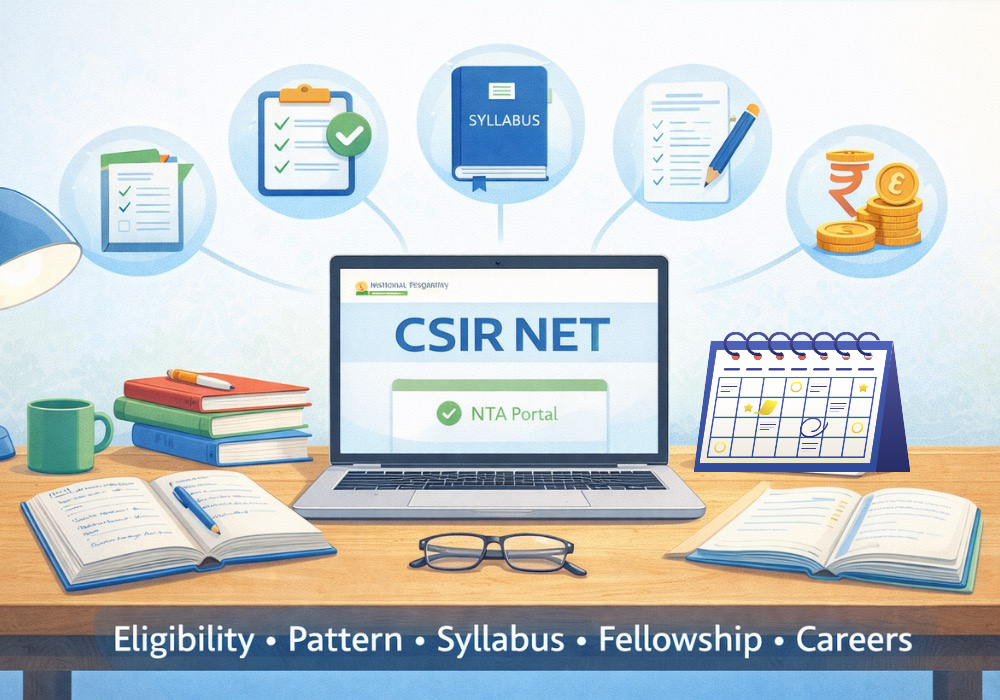
US CPA exam guide for Indians: Learn exam structure under 2024 CPA Evolution, eligibility requirements, complete costs in INR, and application process from India. This article is written by Rohit Arora, Senior Associate at LawSikho. The US CPA exam is the qualifying examination that opens doors to one of the world’s most respected accounting credentials, and Indian professionals are increasingly


CSIR UGC NET Exam is a national-level examination that determines eligibility for Junior Research Fellowship (JRF) and Lectureship in science disciplines, assessing candidates’ subject knowledge, research aptitude, and analytical skills. This article is written by Neeli Neelay Shah, Senior Legal Content Writer at LawSikho.

The CSIR NET examination stands as the definitive pathway for science graduates in India who aspire to build careers in research or academia. Conducted twice annually by the National Testing Agency (NTA), this national-level test determines eligibility for Junior Research Fellowship (JRF) and Assistant Professor positions across five core scientific disciplines: Life Sciences, Chemical Sciences, Physical Sciences, Mathematical Sciences, and Earth Sciences. For postgraduate science students eyeing doctoral research with financial support of ₹37,000 monthly or seeking permanent teaching eligibility in universities, qualifying CSIR NET is often the essential first step toward achieving these career goals.

The Joint CSIR-UGC National Eligibility Test represents a collaborative effort between two of India’s most important scientific and educational bodies to identify promising talent for research and teaching. This examination has become the standard benchmark for assessing scientific aptitude among postgraduate science students, with thousands of candidates appearing in each cycle hoping to secure either fellowship funding or teaching eligibility.

Download Now

The Council of Scientific and Industrial Research (CSIR), functioning under the Ministry of Science and Technology, partners with the University Grants Commission (UGC) to design the examination framework and determine qualification criteria. CSIR brings its expertise in scientific research standards while UGC ensures alignment with academic teaching requirements. Since December 2019, the National Testing Agency has handled all operational responsibilities, from online applications to result declaration, ensuring standardized and transparent examination conduct through Computer-Based Testing across centres nationwide.

Career Pathways after Qualifying the CSIR UGC NET Exam

Qualifying CSIR NET opens distinct career pathways depending on your performance level and the category under which you qualify. The examination serves multiple purposes, each offering substantial benefits for your professional trajectory.

Junior Research Fellowship (JRF)

Candidates who achieve the higher cutoff qualify for JRF, receiving a monthly stipend of ₹37,000 for the first two years along with an annual contingency grant of ₹20,000 for research-related expenses. This fellowship enables full-time doctoral research at CSIR laboratories, IITs, central universities, or any recognized research institution without financial burden. JRF holders automatically qualify for Lectureship as well, giving them flexibility in career choices.

Lectureship and Assistant Professor Eligibility

Those scoring above the Lectureship cutoff (but below JRF) gain permanent eligibility to apply for Assistant Professor positions in Indian universities and colleges. Unlike JRF, this certification has no upper age limit and remains valid for a lifetime. This makes CSIR NET accessible to working professionals seeking academic transitions regardless of their age.

PhD Admission Opportunities

CSIR NET qualification, particularly JRF, substantially strengthens PhD applications at premier institutions. Many universities including IITs and IISc give admission preference to JRF-qualified candidates, with some offering direct admission without additional entrance requirements. The rigorous selection process of CSIR NET serves as validation of research aptitude.

Many aspirants find themselves confused between CSIR NET Exam and UGC NET Exam, particularly those with interdisciplinary backgrounds. While both examinations serve similar purposes and are conducted by NTA, they cater to fundamentally different academic domains and follow distinct examination formats.

Purpose

Both examinations determine eligibility for Junior Research Fellowship and Assistant Professor positions, but in different subject areas. CSIR NET is exclusively for science and technology disciplines, qualifying candidates for research positions in scientific institutions and teaching positions in science departments. UGC NET covers humanities, social sciences, commerce, and languages, qualifying candidates for teaching and research in these non-science domains.

Exam Pattern

The structural differences between these examinations affect preparation strategies significantly. CSIR NET follows a three-part format (Parts A, B, and C) with varying question numbers and marks per subject, totaling 200 marks over three hours. Critically, CSIR NET Exam includes negative marking with 25% deduction for incorrect answers. UGC NET uses a two-paper structure (Paper 1 and Paper 2) totaling 300 marks over three hours, with no negative marking whatsoever. This distinction means CSIR NET requires more strategic answering, while UGC NET allows candidates to attempt all questions without penalty.

Subject Coverage

CSIR NET covers exactly five subjects: Life Sciences, Chemical Sciences, Physical Sciences, Mathematical Sciences, and Earth, Atmospheric, Ocean and Planetary Sciences. UGC NET covers 85 subjects spanning English, Commerce, Economics, Political Science, History, Law, Management, and dozens more. Your postgraduate degree determines which examination you should target. Science graduates with MSc in Chemistry, Physics, Mathematics, Zoology, Botany, Biochemistry, or related fields should appear for CSIR NET exam, while those with degrees in arts, commerce, or social sciences should target UGC NET.

Before investing time in preparation, confirming your eligibility for CSIR NET is essential. The criteria encompass educational qualifications, age restrictions for JRF, and nationality requirements.

Educational Qualifications for CSIR NET Exam

The examination accepts candidates from various educational backgrounds within the science stream, with specific requirements for different degree holders.

Master’s degree with percentage requirement 

Candidates with an M.Sc. or equivalent degree such as Integrated BS–MS, BS (4 years), BE/B.Tech, B.Pharma, or MBBS in a relevant science discipline are eligible for CSIR NET. General and General‑EWS candidates must have at least 55% marks (without rounding off), while OBC‑NCL, SC, ST, PwD, and Third Gender candidates require a minimum of 50% marks from a recognized university or institution. 

Final Year Students and CSIR NET Exam

Students in their final year of postgraduate studies can apply under the Result Awaited (RA) category. This allows you to appear for the examination before receiving your final results. However, you must complete your degree with the required percentage before the deadline mentioned in the notification, failing which your qualification may be cancelled.

Age Limits in CSIR NET Exam

Age criteria differ significantly between JRF and Lectureship, affecting which category you can target based on your current age.

JRF Age Limit

The maximum age for JRF qualification is 30 years as on the 1st day of the month in which the examination is concluded. Category-wise relaxations apply: up to 5 years for OBC-NCLT, SC, ST, PwD, Female, and Third Gender candidates 

Assistant Professor Age Criteria

There is no upper age limit for Lectureship qualification. Regardless of your age, if you meet the educational requirements and score above the Lectureship cutoff, you gain permanent teaching eligibility. This provision makes CSIR NET accessible to professionals returning to academia at any career stage.

Nationality 

Only Indian nationals can apply for the Joint CSIR-UGC NET examination. This citizenship requirement applies to both JRF and Lectureship categories.

Understanding the examination structure helps optimize your preparation strategy and time management during the actual test. CSIR NET Exam follows a distinctive three-part format with subject-specific variations.

The Three-Part Question Paper Format (Part A, Part B and Part C)

Part A: General Aptitude (Common for All Subjects)

Part A tests your general aptitude and is common across all five CSIR NET subjects. It contains 20 questions, of which you need to attempt any 15. Each correct answer carries 2 marks, making the total for Part A 30 marks. Topics include numerical ability, logical reasoning, data interpretation and graphical analysis and general science. Negative marking of 25% of the marks allotted for each incorrect answer in this section.

Part B: Subject-Specific Core Concepts

Part B assesses your fundamental understanding of core concepts in your chosen subject. The number of questions varies by subject, ranging from 25 to 50 questions depending on the discipline. This section tests your grasp of basic principles, definitions, and conceptual clarity that form the foundation of your scientific discipline.

The marking scheme for Part B also varies by subject. For some subjects like Life Sciences and Chemical Sciences, each question carries 2 marks with negative marking of 25% of the marks to a particular question. For Physical Sciences and Mathematical Sciences, the marks per question (3 and 3.5, respectively) and negative marking (0.75 and 0.875, respectively) differ. Understanding your subject-specific pattern from the official source is essential.

Part C: Higher-Order and Analytical Questions

Part C is designed to test your analytical abilities and higher-order thinking skills. These questions require application of concepts, problem-solving, and synthesis of knowledge across topics. The questions are generally more challenging and carry higher marks per question, typically 4 to 5 marks depending on the subject.

Part C questions often involve numerical problems, case-based scenarios, or questions requiring integration of multiple concepts. The negative marking in Part C is also proportionally higher, between 1 to 1.32 marks per incorrect answer depending on the subject (25% of the marks allotted to a question). This section differentiates between candidates who have deep understanding versus those with only surface-level knowledge.

Subject-wise CSIR UGC NET Exam Pattern

Each of the five CSIR NET subjects has a slightly different examination pattern in terms of question numbers and marking schemes. Here’s the breakdown for each subject based on the official pattern.

Chemical Sciences Exam Pattern

Chemical Sciences has 120 total questions: 20 in Part A (attempt 15), 40 in Part B (attempt 35), and 60 in Part C (attempt 25). Marks per question are 2 for Parts A and B, and 4 for Part C. Negative marking follows the same pattern as Life Sciences: 0.5 for Parts A and B, 1 mark for Part C. Total marks: 200.

Earth Sciences Exam Pattern

Earth, Atmospheric, Ocean and Planetary Sciences has 150 total questions: 20 in Part A (attempt 15), 50 in Part B (attempt 35), and 80 in Part C (attempt 25). Marks are 2 each for Parts A and B, and 4 for Part C. Negative marking is 0.5 for Parts A and B, and 1.32 for Part C, which is the highest among all subjects. Total marks: 200.

Life Sciences Exam Pattern

Life Sciences has 145 total questions: 20 in Part A (attempt 15), 50 in Part B (attempt 35), and 75 in Part C (attempt 25). The marks distribution is 2 marks per question in Parts A and B, and 4 marks per question in Part C. Negative marking is 0.5 for Parts A and B, and 1 mark for Part C. Total marks: 200.

Mathematical Sciences Exam Pattern

Mathematical Sciences has 120 total questions: 20 in Part A (attempt 15), 40 in Part B (attempt 25), and 60 in Part C (attempt 20). Marks per question are 2 for Part A, 3 for Part B, and 4.75 for Part C. Notably, there is no negative marking in Part C for Mathematical Sciences, while Parts A and B have 0.5 and 0.75 marks deduction respectively. Total marks: 200.

Physical Sciences Exam Pattern

Physical Sciences has few questions but higher marks per question. It has 75 total questions: 20 in Part A (attempt 15), 25 in Part B (attempt 20), and 30 in Part C (attempt 20). The marking differs here: 2 marks for Part A, 3.5 marks for Part B, and 5 marks for Part C. Negative marking is 0.5 for Part A, 0.875 for Part B, and 1.25 for Part C. Total marks: 200.

Marking Scheme, Negative Marking and Minimum Qualifying Marks 

All CSIR NET subjects total 200 marks with three-hour duration. The critical difference from UGC NET is negative marking: incorrect answers deduct 0.5 marks in Part A, while Parts B and C have proportional deductions of 25% of question marks (ranging from 0.5 to 1.32 marks depending on subject). For example, Life Sciences has 0.5 marks deduction in Parts A and B, and 1 mark in Part C. Mathematical Sciences uniquely has no negative marking in Part C, only in Parts A and B. This marking scheme demands strategic question selection rather than attempting everything. 

Understanding the minimum score requirements is equally crucial for exam strategy. For CSIR UGC NET, the combined marks of Parts A, B and C are used to prepare the merit list. To be considered for either JRF or Lectureship/Assistant Professor, candidates must score at least 33% in aggregate if they belong to General, EWS or OBC categories, and at least 25% if they belong to SC, ST or PwD/PwBD categories. 

The syllabus spans fundamental concepts to advanced topics, with Part A common across subjects and Parts B and C being subject-specific. Familiarity with syllabus structure enables targeted preparation.

The CSIR UGC NET syllabus is comprehensive, covering fundamental concepts through advanced topics in each scientific discipline. Understanding the syllabus structure helps prioritize your preparation and focus on high-weightage areas. The official syllabus PDFs are available on the NTA CSIR NET website for detailed reference.

Part A Syllabus (Common for All Subjects)

Part A syllabus is identical across all five subjects and tests general aptitude rather than subject-specific knowledge. This section can be prepared uniformly regardless of your chosen subject, making it a reliable source of marks if prepared well.

Numerical Ability Topics

Numerical ability covers number systems, simplification, percentages, profit and loss, simple and compound interest, ratio and proportion, LCM and HCF, averages, probability, trigonometry and mensuration. These are fundamental mathematical concepts that most science graduates are familiar with from their school and undergraduate education. Regular practice with numerical problems helps improve both accuracy and speed.

Reasoning and Analytical Ability

This section includes logical reasoning, series completion, coding-decoding, analogies, classification, ranking and arrangement, direction sense, calendar and clock, blood relations, and puzzle-solving. These questions test your ability to identify patterns, make logical deductions, and solve problems systematically. Practice with reasoning workbooks and previous year questions is essential.

Data Interpretation and Graphical Analysis

Data interpretation involves analyzing information presented in tables, bar graphs, pie charts, line graphs, and other visual formats. Questions require you to extract relevant data, perform calculations, and draw conclusions. Graphical analysis extends to understanding scientific graphs and charts commonly used in research publications.

General Sciences 

General Science covers basic concepts from physics, chemistry, and biology that a science graduate is expected to know, such as common vitamins and deficiency diseases, human body systems and everyday health, fundamental physical and chemical phenomena, and widely used scientific instruments and innovations

Part B and C: Subject-Wise Syllabus 

Parts B and C cover subject-specific content at increasing levels of complexity. Part B focuses on fundamental concepts while Part C tests application and analytical abilities. Here’s an overview of syllabus highlights for each subject.

Life Sciences

Life Sciences syllabus covers molecular biology of the cell, cellular organization, fundamental processes, inheritance biology, developmental biology, cell signaling, diversity of life forms, ecological principles, evolution and behavior, applied biology, and methods in biology. Key areas include biochemistry, genetics, immunology, microbiology, and plant and animal physiology. 

Chemical Sciences

Chemical Sciences encompasses inorganic chemistry (periodic properties, coordination chemistry, organometallics), organic chemistry (stereochemistry, reaction mechanisms, spectroscopy) and physical chemistry (thermodynamics, kinetics, quantum chemistry).The syllabus also includes Chemistry in Nanoscience and Technology, Catalysis and Green Chemistry, Medicinal Chemistry, supramolecular chemistry and environmental chemistry.

Physical Sciences

Physical Sciences covers classical mechanics, electromagnetic theory, quantum mechanics, thermodynamics and statistical physics, electronics, atomic and molecular physics, condensed matter physics, nuclear and particle physics, and general physics. Mathematical physics forms a significant portion, including linear algebra, calculus, and differential equations applied to physical problems.

Mathematical Sciences

Mathematical Sciences syllabus includes analysis (real and complex), linear algebra, complex algebra, algebra, ordinary and partial differential equations, numerical analysis, calculus of variations, linear integral equations, classical mechanics, probability and statistics and descriptive statistics, exploratory data analysis. The syllabus demands strong foundational knowledge and problem-solving skills across pure and applied mathematics.

Earth Sciences

The CSIR UGC NET Earth Sciences syllabus spans geology, geophysics, meteorology, oceanography and physical geography. It covers topics like Earth–solar system, interior, plate tectonics, oceans and atmosphere, environmental earth sciences, mineralogy and petrology, structural geology, stratigraphy and paleontology, marine geology, geochemistry, seismology, climate and monsoon systems, and physical/chemical/biological oceanography.

The entire application process is online through the NTA portal. Completing each step accurately ensures smooth processing of your candidature.

Register on NTA Portal

Visit the official CSIR NET website and click “New Registration.” Provide your name, date of birth, email, and mobile number. After successful registration, you receive an Application Number and password via email and SMS. Keep these credentials safe for all future steps.

Fill CSIR NET Exam Form

Log in using your Application Number to access the application form. Enter personal details, educational qualifications, category details, subject choice, 4 preferred examination cities, and other required information. Ensure all details match your official documents exactly to avoid verification issues later.

Upload Documents

Upload your passport-sized photograph (10-200 KB, JPG format) and signature (10-50 KB, JPG format) following exact specifications. Category certificates and disability certificates (if applicable) must also be uploaded. Incorrect specifications may cause technical rejection.

CSIR NET Exam Application Fee

Application fees for general category candidates pay ₹1,150, while OBC (NCL) and EWS candidates pay ₹600. SC, ST, PwD, and Third Gender candidates pay ₹375. 

You can pay the application fees via Credit Card, Debit Card, Net Banking, and UPI. After successful payment, download the confirmation page and save it. Complete payment well before the deadline to avoid technical issues.

The financial benefits of JRF qualification are substantial, designed to support full-time research without economic constraints. Understanding the complete fellowship structure helps appreciate its value.

JRF Fellowship Stipend and Allowances

JRF recipients receive ₹37,000 monthly for the first two years (revised rates effective January 2023). Additionally, an annual contingency grant of ₹20,000 supports research expenses including books, journals, and conference travel. 

SRF Eligibility and Stipend

After two years as JRF and PhD registration, you become eligible for Senior Research Fellowship (SRF) upgradation. A three-member committee assesses your research progress. Upon successful upgradation, monthly stipend increases to ₹42,000 from the third year. The total fellowship tenure (JRF plus SRF) extends up to five years.

Shyama Prasad Mukherjee (SPM) Fellowship through CSIR NET Exam

The SPM Fellowship honors exceptional CSIR NET qualifiers, providing enhanced support for outstanding research potential.

SPM Fellows are selected through competitive interviews from top-ranked JRF qualifiers. The fellowship offers enhanced stipend, additional contingency grants, and recognition as one of India’s top scientific talents. Selection is subject-wise, with specific allocations for each discipline. This prestigious fellowship is tenable at CSIR laboratories and recognized research institutions for doctoral research.

Effective preparation combines strategic planning, quality resources, and consistent practice. Here are approaches that successful candidates have found useful.

Study Plan for CSIR NET Exam

A structured plan ensures comprehensive syllabus coverage while allowing adequate revision time.

Balancing All Three Parts

Allocate approximately 15-20% of preparation time to Part A (General Aptitude), as this section offers reliable marks with regular practice. Dedicate 40% to Part B fundamentals, building strong conceptual foundations. Reserve 40% for Part C analytical problem-solving, which carries roughly half the total marks and determines JRF qualification.

6 months Study Plan

With six months available, divide the first three months for complete syllabus coverage with thorough conceptual understanding. Spend months four and five on intensive practice through mock tests and previous year questions. Reserve the final month for revision and weak area improvement.

3 months Study Plan

Three months require focused preparation on high-weightage topics identified through previous year analysis. Complete core concepts in the first six weeks, practice intensively for the next four weeks, and dedicate the final two weeks to revision and mock tests under exam conditions.

Best Books for CSIR NET Exam

Part A Books

RS Aggarwal’s Quantitative Aptitude and Reasoning books provide comprehensive practice for General Aptitude. “CSIR-NET General Aptitude: A New Outlook” by Christy Varghese is specifically designed for this examination.

Subject-Specific Books

For Life Sciences, standard references include Lehninger’s Principles of Biochemistry, Alberts’ Molecular Biology of the Cell, Gerald Karp’s Cell and Molecular Biology, and Snustad and Simmons’ Principles of Genetics. For Chemical Sciences, JD Lee for Inorganic Chemistry, Paula Bruice for Organic Chemistry, and Atkins for Physical Chemistry are recommended.

Physical Sciences preparation benefits from Goldstein’s Classical Mechanics, Griffiths’ Introduction to Electrodynamics, and Shankar’s Principles of Quantum Mechanics. Mathematical Sciences requires Rudin’s Principles of Mathematical Analysis, Sheldon Axler’s Linear Algebra Done Right, and Simmons’ Differential Equations. For Earth Sciences, Arthur Holmes’ Introduction to Geology (a strong foundation pick) and related specialized texts are useful.

Online Resources for CSIR NET Exam

Previous year question papers are available on the CSIR HRDG website and coaching platforms. Solving these papers helps candidates understand question patterns, difficulty levels, and frequently tested topics across different subjects. You can also use various notes and free YouTube videos to study wherein educators offer subject-specific lecture series, topic-wise explanations, and problem-solving sessions that complement textbook learning and provide additional clarity on complex concepts.

Solving Previous Year Questions of CSIR NET Exam

Analyzing PYQs from the last 5-10 years reveals question patterns, frequently tested topics, and expected difficulty levels. Many concepts repeat with slight variations, making thorough PYQ practice invaluable. Create topic-wise analysis charts to identify high-frequency areas deserving additional attention.

Careers for JRF Holders from CSIR NET Exam

JRF qualification provides both immediate financial support and long-term career advantages.

Join CSIR Labs

JRF holders can pursue doctoral research at any of the 37 CSIR laboratories nationwide, including NCL Pune, CDRI Lucknow, CCMB Hyderabad, and others. These laboratories offer excellent research infrastructure, expert mentorship, and exposure to cutting-edge scientific work.

PhD with JRF Fellowship

Many premier institutions including IITs, IISc, and central universities give admission preference to JRF qualifiers. Some offer direct PhD admission without additional entrance tests. The JRF award letter significantly strengthens applications to competitive doctoral programs.

Research Scientist

Post-PhD career options include research scientist positions in government laboratories (CSIR, DRDO, ISRO, ICMR), postdoctoral fellowships, and industry R&D roles in pharmaceutical, biotech, and technology companies. Publications and research experience during fellowship build strong credentials.

Careers for NET Qualifiers from CSIR NET Exam

Lectureship qualification creates permanent teaching eligibility with lifetime validity.

Assistant Professor Jobs

NET qualifiers can apply for Assistant Professor positions in central universities, state universities, and deemed universities. The UGC website provides recruitment guidelines and vacancy notifications. NET qualification is mandatory or strongly preferred for most university positions.

Lecturer Positions

Beyond universities, positions exist in government and private colleges, technical institutions, and research organizations with training programs. Institutions like IISERs, NITs, and specialized research centres often prefer NET-qualified candidates for teaching roles.

The CSIR UGC NET examination remains the most valuable credential for science graduates seeking careers in research or academia in India. With JRF fellowship offering ₹37,000 monthly and Lectureship providing lifetime teaching eligibility, qualifying this examination creates meaningful career opportunities. The examination tests not merely subject knowledge but analytical thinking and research aptitude, preparing successful candidates for the rigors of scientific inquiry. Whether you’re completing your MSc or considering a career transition into academia, CSIR NET provides a clear, structured pathway. Begin with thorough syllabus understanding, prioritize high-weightage topics through previous year analysis, and maintain consistent preparation over several months. For official updates on eligibility, exam dates, and applications, regularly check the NTA CSIR NET portal.

Want to know about how to choose the right subject, cut-off, result of CSIR UGC NET? Click here.  

Serato DJ Crack 2025Serato DJ PRO Crack


News
Berita Teknologi
Berita Olahraga
Sports news
sports
Motivation
football prediction
technology
Berita Technologi
Berita Terkini
Tempat Wisata
News Flash
Football
Gaming
Game News
Gamers
Jasa Artikel
Jasa Backlink
Agen234
Agen234
Agen234
Resep
Cek Ongkir Cargo
Download Film

CSIR UGC NET Exam is a national-level examination that determines eligibility for Junior Research Fellowship (JRF) and Lectureship in science disciplines, assessing candidates’ subject knowledge, research aptitude, and analytical skills. This article is written by Neeli Neelay Shah, Senior Legal Content Writer at LawSikho. The CSIR NET examination stands as the definitive pathway for science graduates in India who aspire to


CPA exam difficulty explained for Indian professionals: Q3 pass rates, section-wise challenges, how your CA/B.Com/MBA background affects preparation, and realistic study timelines. This article is written by Rohit Arora, Senior Associate at LawSikho.

Is the CPA exam really as hard as everyone says? 

If you are an Indian accounting professional considering this credential, you have probably heard conflicting opinions ranging from “it’s manageable with proper preparation” to “it’s one of the toughest professional exams globally.” 

Download Now

The truth lies somewhere in between, and understanding exactly where requires looking beyond surface-level advice. With pass rates hovering around 50% per section and successful candidates investing 400 or more hours in preparation, the CPA exam demands genuine commitment. 

This guide gives you the unfiltered reality: what makes the exam difficult, how your specific Indian background shapes your experience, and what separates candidates who pass from those who do not.

Before diving into preparation strategies or review course comparisons, you need an honest assessment of what you are signing up for. The CPA exam has earned its reputation as a challenging professional credential, but that reputation sometimes gets exaggerated or understated depending on who you ask. 

Data tells a clearer story than opinions, and recent AICPA statistics reveal exactly how candidates are performing across all six exam sections.

What Do Current CPA Pass Rates Really Tell Candidates?

The most recent Q3 2025 data from AICPA shows meaningful variation across exam sections. 

The most recent Q3 2025 data from AICPA shows meaningful variation across exam sections. FAR (Financial Accounting and Reporting) recorded a 43.07% pass rate, making it statistically the most challenging Core section. AUD (Auditing and Attestation) came in at 50.03%, representing a near coin-flip probability for candidates. REG (Regulation) performed strongest among Core sections at approximately 66%, reflecting higher success rates among candidates who commit adequately to tax and business law preparation.

The Discipline sections introduced under CPA Evolution show even wider spreads. 

BAR (Business Analysis and Reporting) remains one of the most difficult, with pass rates around the low-40% range. ISC (Information Systems and Controls) recorded approximately 67% in Q3 2025, reflecting improving outcomes as preparation resources mature. TCP (Tax Compliance and Planning) continues to lead all sections with pass rates above 76%, making it statistically the most approachable Discipline.

However, these numbers require interpretation. A published pass rate does not reflect an individual candidate’s probability of success. Well-prepared candidates consistently outperform the average, which includes underprepared and prematurely scheduled exam attempts. Individual outcomes depend primarily on preparation quality, study time, and exam readiness

Five Factors That Make the CPA Exam Challenging

The CPA exam’s difficulty stems from multiple compounding factors rather than any single element. Understanding each factor helps you address them systematically during preparation.

First, the syllabus volume is substantial. FAR alone covers US GAAP financial reporting, governmental accounting, not-for-profit accounting, and select IFRS topics. REG encompasses individual taxation, business taxation, business law, and professional ethics. No single section allows shallow knowledge; each demands genuine understanding across broad content areas.

Second, the exam uses multiple question formats testing different skills. Multiple-choice questions assess recognition and quick application, while task-based simulations require you to apply knowledge in realistic scenarios. The simulations often present complex fact patterns requiring careful analysis, research, and calculations. Many candidates comfortable with MCQs struggle when simulations demand deeper application.

Third, time pressure is real. Each section allocates exactly four hours, including a 15-minute optional break. Question counts vary significantly: FAR has 50 MCQs while ISC has 82. Running out of time means leaving questions unanswered, and unanswered questions score zero. Mental stamina across four hours of concentrated effort challenges candidates who have not practiced under timed conditions.

Fourth, the adaptive testing mechanism adjusts difficulty based on your performance. Strong performance on initial MCQ testlets triggers harder questions in subsequent testlets. This means the exam feels progressively more difficult for well-prepared candidates, creating psychological pressure even when you are performing well.

Fifth, the 30-month completion window creates ongoing pressure. Once you pass your first section, you have 30 months to pass the remaining three. Credits expire on a rolling basis, meaning poor planning can result in retaking sections you already passed. This timeline constraint adds strategic complexity to your overall exam journey.

Which CPA Section Is the Hardest and How Should You Plan for It?

Section difficulty varies based on content type, your background, and how recently you studied related material. However, pass rate patterns reveal consistent trends about where candidates struggle most. Strategic planning based on these patterns improves your overall success probability.

Core Sections: FAR, AUD, and REG

FAR earns its reputation as the most challenging Core section through both statistics and candidate experience. The 43% pass rate reflects the section’s vast scope covering financial accounting frameworks, governmental accounting, and not-for-profit reporting. For Indian candidates specifically, FAR difficulty compounds because US GAAP treatment of topics like revenue recognition, leases, and stock compensation differs from Indian Accounting Standards. You are not just learning new material; you are sometimes unlearning existing frameworks.

AUD presents different challenges at its 50% pass rate. The section tests professional judgment around audit procedures, internal controls, and ethical requirements. Questions often present scenarios where multiple answers seem partially correct, requiring you to identify the “best” response. Indian candidates with audit experience find some concepts familiar, but US auditing standards (GAAS, PCAOB requirements) differ meaningfully from Indian Standards on Auditing. The conceptual nature of AUD questions frustrates candidates who prefer objective, calculation-based problems.

REG achieves the strongest Core section pass rate at 66%, but this number can mislead Indian candidates. American candidates often studied US taxation in undergraduate programs, making the REG partly review material. 

For you, US federal taxation represents an entirely new subject area with no foundation from Indian tax knowledge. Topics like basis calculations, passive activity limitations, and S-corporation taxation follow rules completely different from anything in Indian tax law. Budget preparation time accordingly, despite the favorable statistics.

Discipline Section Selection Based on Your Strengths

Your Discipline choice meaningfully impacts overall exam difficulty, and the decision deserves careful consideration rather than defaulting to whichever section seems easiest.

BAR extends FAR content into advanced accounting topics and financial analysis. Pass rates in the low-40% range place it alongside FAR as the most challenging section overall. Candidates choosing BAR typically have strong accounting backgrounds and target financial reporting roles where this expertise provides career value. Indian CAs often select BAR because it aligns with their training, accepting the lower pass rate in exchange for relevance.

ISC covers information technology governance, system controls, and cybersecurity concepts. With pass rates in the high-60% range, it is statistically more approachable, and the content translates across borders better than tax law. The section uniquely weights MCQs at 60% compared to 40% for simulations.

TCP builds directly on REG content, extending into advanced tax planning. Pass rates above 75% make it the most approachable Discipline, partly because candidates who succeed in REG often select TCP. However, TCP requires the same US tax foundation as REG; struggles in REG typically carry forward rather than disappear.

The content overlap between REG and TCP allows efficient preparation, but Indian candidates must recognize that TCP requires the same US tax foundation as REG. If you struggled with REG content, TCP will not suddenly become easy.

Choose based on career goals and genuine interest rather than pass rates alone. A section with higher pass rates becomes harder for you personally if the content does not align with your background or engage your interest. Conversely, a statistically harder section becomes manageable when the content matches your expertise and professional aspirations.

How Your Indian Background Affects CPA Difficulty

Your experience with the CPA exam will differ meaningfully from that of American candidates who studied US accounting and taxation throughout their education. Recognizing these India-specific factors helps you plan realistically and avoid underestimating preparation requirements.

What Unique Challenges Do Indian CPA Aspirants Face?

The US GAAP learning curve hits Indian accounting professionals harder than most anticipate. If you trained under Indian Accounting Standards or worked with Ind AS in practice, you have internalized frameworks that sometimes contradict US GAAP treatment. Revenue recognition under ASC 606, lease accounting under ASC 842, and consolidation procedures all require learning new rules. Worse, your existing knowledge can create confusion when familiar transactions receive different accounting treatment under US standards.

US federal taxation represents the steepest learning curve for most Indian candidates. Nothing in Indian tax education or practice prepares you for concepts like basis, at-risk limitations, qualified business income deductions, or estate and gift taxation. American candidates often find REG manageable because they covered these topics in undergraduate coursework. You are starting from zero, making REG and TCP substantially more time-intensive despite their favorable pass rates.

Studying while working full-time in India creates practical challenges beyond the universal difficulty of balancing work and exam preparation. Indian corporate culture often involves long hours, weekend availability expectations during busy periods, and limited flexibility for personal commitments. Finding 15 to 20 hours weekly for focused study requires intentional scheduling and often difficult conversations with supervisors about workload management during preparation periods.

Testing logistics adds another layer of complexity. Prometric administers the CPA exam at eight centers across India in Ahmedabad, Bangalore, Calcutta, Chennai, Hyderabad, Mumbai, New Delhi, and Trivandrum. Seat availability can be limited, particularly during popular testing months. Discipline sections are offered only during quarterly windows, requiring you to align preparation timelines with these limited opportunities.

Does Your Indian Qualification Make CPA Easier or Harder?

Your specific Indian credentials shape your CPA experience in distinct ways, and understanding these dynamics helps you plan preparation strategically.

Indian Chartered Accountants bring the strongest technical foundation to CPA preparation. CA training develops rigorous accounting knowledge and professional discipline that transfers well to CPA study habits. However, CAs often struggle more than expected because their expertise creates overconfidence about US-specific content. The accounting principles feel familiar, but the specific rules differ enough to cause errors. CAs benefit from focusing preparation time on US GAAP differences rather than assuming their existing knowledge covers the material.

B.Com graduates face a different challenge. Without professional qualification training, foundational concepts may need more development before tackling CPA-level material. However, B.Com holders often approach US content with fewer preconceptions to unlearn. The learning curve is steeper initially, but without the interference effects that trip up experienced practitioners.

MBA Finance graduates have a business context that helps with understanding how accounting fits into organizational decision-making. However, MBA programs vary significantly in accounting depth, and many MBA holders lack the technical foundation that CA or even B.Com programs provide. Evaluate your specific coursework honestly rather than assuming the MBA credential signals exam readiness.

Each background has advantages and challenges. The key is honest self-assessment about where your preparation needs to focus rather than assuming your credentials automatically translate to CPA readiness.

Time investment is the factor most within your control, and understanding realistic requirements helps you plan effectively. Underestimating study hours is among the most common mistakes candidates make, leading to failed sections that could have been passed with adequate preparation.

Total Hours and Weekly Commitment

Industry consensus from AICPA, major review providers, and successful candidate data suggests 300 to 500 total hours across all four sections. Becker recommends 400 to 600 hours, breaking down to 100 to 150 hours per section. AICPA’s guidance indicates 330 to 500 hours for typical candidates. These ranges reflect variation in candidate backgrounds and study efficiency.

For Indian candidates, planning toward the higher end makes sense. 

US-specific content that American candidates partly review represents new learning for you, adding hours to each section. FAR typically demands 100 to 150 hours given its scope and US GAAP depth. AUD and REG each require 90 to 120 hours, with REG potentially needing more for Indian candidates without a US tax foundation. Discipline sections generally need 80 to 100 hours, varying based on which section you choose and how it relates to your background.

Translating totals into weekly schedules, most working professionals target 15 to 20 hours. At 15 hours weekly, a 120-hour section requires 8 weeks of preparation. The math suggests 8 to 10 months for all four sections at this pace, not counting breaks between sections or potential retake time. Realistically, most Indian working professionals complete the CPA exam in 18 to 24 months, with some finishing faster through more intensive weekly commitments.

Completion Timeline Options for Indian Professionals

Your timeline should reflect an honest assessment of available time rather than aspirational targets you cannot sustain.

A 12-month aggressive timeline works for candidates with significant study availability. This might include recent graduates not yet working full-time, professionals on sabbatical, or those whose employers provide study time. This pace requires 20 to 25 hours weekly and leaves minimal buffer for failed sections. The advantage is maintaining momentum and minimizing the risk of forgetting earlier material.

An 18-month balanced approach suits most working professionals. This timeline allows 15 to 20 hours weekly with reasonable buffers between sections. You can absorb a failed section without derailing your overall plan. The pace remains aggressive enough to maintain engagement without requiring unsustainable sacrifices.

A 24-month extended timeline fits candidates managing particularly heavy work commitments or significant personal obligations. This pace requires only 10 to 15 hours weekly but demands sustained commitment over a longer period. The risk is losing momentum or forgetting earlier material, but the approach proves necessary for some candidates whose circumstances do not permit more intensive preparation.

Choose your timeline based on honest assessment of sustainable weekly hours rather than comparing yourself to others whose circumstances differ from yours.

The total journey from deciding to pursue CPA to holding your license extends beyond just exam preparation time. Understanding the complete timeline helps you set realistic expectations and plan your career moves accordingly.

Most Indian candidates complete all four exam sections within 18 to 24 months from their first exam date. However, the complete process starts earlier with credential evaluation (typically 4 to 8 weeks through agencies like NASBA International Evaluation Services or WES), state board application (2 to 6 weeks depending on jurisdiction), and Notice to Schedule receipt (several weeks after application approval). Adding these pre-exam phases, the total journey from initial decision to final exam pass typically spans 2 to 3 years.

Factors that extend timelines include failed sections requiring retakes, work commitments that reduce available study time, and scheduling challenges with Prometric availability. Factors that compress timelines include prior US accounting education, employer support providing study time, and aggressive but sustainable weekly hour commitments. Most candidates experience some combination of accelerating and delaying factors.

The 30-month credit window provides meaningful flexibility compared to the previous 18-month requirement. However, planning to use the full 30 months from the start often leads to procrastination and credit expiration pressure later. Aim to complete within 18 to 24 months while treating the additional buffer as insurance against unexpected setbacks rather than as your primary plan.

The CPA exam is genuinely difficult, and approaching it with anything less than serious commitment sets you up for frustration and wasted resources. Pass rates around 50% per section, hundreds of required study hours, and unfamiliar US-specific content all demand respect. For Indian professionals, additional challenges around US GAAP transitions, entirely new taxation frameworks, and balancing preparation with demanding work schedules compound the baseline difficulty.

However, difficulty does not mean impossibility. Thousands of Indian professionals earn CPA credentials annually, many while managing full-time jobs and family responsibilities. Success requires realistic expectations, strategic preparation focused on your specific gaps, and sustained commitment across 18 to 24 months. The candidates who pass are not necessarily the smartest or most experienced; they are the ones who prepared adequately, managed their time effectively, and persisted through setbacks.

Your next step is honest self-assessment. Evaluate your background against the challenges outlined in this guide. Identify which sections will prove most difficult for you, specifically, not just statistically. Estimate sustainable weekly study hours based on your actual schedule, not aspirational targets. Then commit to the preparation required, understanding that the career opportunities CPA unlocks justify the investment you are about to make.

For a deeper analysis of CPA exam difficulty, read my detailed article on Is the CPA Exam Hard?

Serato DJ Crack 2025Serato DJ PRO Crack


News
Berita Teknologi
Berita Olahraga
Sports news
sports
Motivation
football prediction
technology
Berita Technologi
Berita Terkini
Tempat Wisata
News Flash
Football
Gaming
Game News
Gamers
Jasa Artikel
Jasa Backlink
Agen234
Agen234
Agen234
Resep
Cek Ongkir Cargo
Download Film

CPA exam difficulty explained for Indian professionals: Q3 pass rates, section-wise challenges, how your CA/B.Com/MBA background affects preparation, and realistic study timelines. This article is written by Rohit Arora, Senior Associate at LawSikho. Is the CPA exam really as hard as everyone says?  If you are an Indian accounting professional considering this credential, you have probably heard conflicting opinions ranging


US CPA exam guide for Indians: Learn exam structure under CPA Evolution, eligibility requirements, complete costs in INR, and application process from India. This article is written by Rohit Arora, Senior Associate at LawSikho.

The US CPA exam is the qualifying examination that opens doors to one of the world’s most respected accounting credentials, and Indian professionals are increasingly recognizing its value. 

Whether you’re a working accountant at a Big 4 firm, a CA looking to add global credentials, or a commerce graduate planning an international career, understanding what this exam involves is your first step toward making an informed decision about pursuing it from India.

The CPA exam underwent a major overhaul in January 2024 when the AICPA introduced CPA Evolution, replacing the previous four-section format with a new Core plus Discipline model. 

Download Now

This restructuring reflects the changing demands of the accounting profession and gives candidates the flexibility to specialize in areas aligned with their career goals. If you’re researching the CPA exam today, everything you read about the old BEC section is now outdated.

Three Core Sections Every Candidate Must Pass

Every CPA candidate must clear three mandatory core sections regardless of their chosen specialization. These sections test the foundational competencies that all CPAs need, from auditing procedures to financial reporting and taxation. 

The three core sections are: 

  • Auditing and Attestation (AUD), 
  • Financial Accounting and Reporting (FAR), and 
  • Taxation and Regulation (REG).

AUD focuses on audit planning, evidence gathering, and professional ethics, containing 78 multiple-choice questions and 7 task-based simulations within a 4-hour window. FAR covers US GAAP, governmental accounting, and nonprofit reporting with 50 MCQs and 7 simulations. REG tests US federal taxation and business law concepts through 72 MCQs and 8 simulations. Each section requires a score of 75 or higher on a 0-99 scale to pass.

For Indian candidates, FAR and REG typically present the steepest learning curves. FAR requires mastering US GAAP, which differs significantly from Indian Accounting Standards in areas like lease accounting and revenue recognition. REG introduces an entirely new body of knowledge since US tax law has no overlap with Indian taxation. However, candidates with IFRS exposure often find FAR somewhat familiar due to convergence between US GAAP and international standards.

Choosing Your Discipline Section: BAR, ISC, or TCP

Beyond the three core sections, you must select one discipline section that allows for specialization. Your options are Business Analysis and Reporting (BAR), Information Systems and Controls (ISC), and Tax Compliance and Planning (TCP). This choice should reflect both your career aspirations and your existing strengths.

BAR extends the financial accounting knowledge tested in FAR, covering advanced topics like derivatives, business combinations, and managerial accounting concepts. It suits candidates targeting financial analysis, controllership, or CFO-track roles. ISC focuses on IT governance, cybersecurity, and system controls, making it ideal for those interested in IT audit or technology consulting. TCP builds on REG’s tax foundation with advanced planning concepts and is popular among candidates pursuing tax advisory careers.

The pass rate data from 2024–2025 shows clear patterns across discipline sections. TCP consistently records the highest pass rates, ranging from approximately 72 to over 80 percent, reflecting the fact that many candidates opting for TCP already have strong tax backgrounds and have cleared REG. 

ISC sits in the mid-to-high range, improving from around 58 percent in 2024 to nearly 68 percent in 2025, while BAR has proven the most challenging discipline, with pass rates hovering around 40 to 42 percent. However, choosing a discipline based solely on pass rates is unwise; candidates should select the option that best aligns with their professional experience and long-term career goals.

Exam Duration, Question Types, and Scoring

Each CPA exam section runs exactly four hours, giving you 16 total testing hours across all four sections. The exam format combines multiple-choice questions (MCQs) with task-based simulations (TBSs), and understanding how these are weighted helps you allocate preparation time effectively.

MCQs test your knowledge, recall, and conceptual understanding through four-option questions with no negative marking. TBSs are scenario-based questions requiring you to analyze documents, perform calculations, or complete practical tasks like journal entries and reconciliations. For most sections, MCQs and TBSs each contribute 50 percent to your final score. The exception is ISC, where MCQs carry 60 percent weight.

Your final score uses a scaled methodology that accounts for question difficulty. A score of 75 represents the minimum competency standard, not 75 percent correct answers. The AICPA uses psychometric scaling to ensure scores are comparable across different test forms and testing windows. This means a 75 earned in January holds the same meaning as a 75 earned in August.

Before investing time and money into CPA preparation, you need to confirm that you meet the eligibility requirements. Unlike Indian professional exams with standardized national criteria, CPA eligibility varies by US state, and Indian candidates must navigate this complexity carefully. The good news is that several states have requirements specifically accommodating international candidates.

The 150 Credit Hour Rule and Indian Degree Equivalence

US states measure educational qualifications in semester credit hours, with most requiring 150 credits for CPA licensure. The standard conversion assigns approximately 30 credits per year of Indian university education. This means a three-year B.Com translates to roughly 90 credits, while adding a two-year M.Com brings you to approximately 150 credits.

If you hold only a B.Com, you’ll likely need additional coursework or credentials to meet eligibility. Many states allow candidates to sit for the exam with 120 credits (enough for B.Com plus one year of postgraduate study) and complete the remaining 30 credits before licensure. Indian Chartered Accountants typically receive 30 to 40 additional credits for their CA designation during evaluation, which can bridge the gap effectively.

The key is understanding that credit requirements have two thresholds: one for exam eligibility (usually 120 credits) and another for licensure (usually 150 credits). Planning your pathway requires knowing which threshold you currently meet and what additional education you might need.

States That Accept Indian Candidates Without SSN

Not every US state accepts international candidates, and some require a Social Security Number that Indian residents don’t have. Fortunately, several states have removed this barrier, making them popular choices for Indian CPA aspirants. Montana, Colorado, Washington, Alaska, and Guam are the most commonly chosen jurisdictions.

Montana consistently ranks as the top choice among Indian candidates due to its straightforward requirements and efficient processing. The state doesn’t require US residency, accepts international credentials without excessive documentation hurdles, and processes applications relatively quickly. Colorado and Washington offer similar accessibility with slightly different fee structures and experience requirements for eventual licensure.

When selecting your state, consider factors beyond just exam eligibility. Look at the experience requirements for licensure, CPE requirements for license renewal, and whether the state participates in mobility agreements that let you practice elsewhere. Your state choice is a long-term decision, not just a tactical move for exam access.

Credential Evaluation Through WES and NIES

Every international candidate must have their educational credentials evaluated by an approved agency before applying. This evaluation translates your Indian degrees into US credit hour equivalents that state boards can understand. The two most popular agencies for Indian candidates are World Education Services (WES) and NASBA International Evaluation Services (NIES).

WES is the most widely recognized evaluation agency globally, charging $200 to $300 depending on the services you select. They require official transcripts sent directly from your universities in sealed envelopes, along with degree certificates and mark sheets. Processing typically takes 4 to 6 weeks after all documents arrive. NIES, operated by NASBA itself, offers the advantage of seamless integration with the CPA application process and charges $225 to $275.

Start the evaluation process early because document collection from Indian universities can be time-consuming. You’ll need official transcripts, degree certificates, and mark sheets from every institution you attended. If you’re a CA, include documentation from ICAI confirming your membership and qualification status.

The financial investment for CPA certification is substantial, and Indian candidates face higher costs than their American counterparts due to international testing surcharges. Understanding the complete cost picture helps you budget appropriately and avoid unpleasant surprises midway through your journey.

Section-wise Exam Fees Including International Testing Charges

NASBA implemented a fee increase in 2025 that significantly impacted international candidates. The base examination fee is approximately $262.64 per section, but Indian candidates must also pay an international administration fee of $390 per section. This brings your total examination cost to roughly $510 to $520 per section, translating to approximately ₹43,000 at current exchange rates.

For all four sections, your examination fees alone will total approximately $2,040 to $2,080, or roughly ₹1,71,000 to ₹1,75,000. These fees are paid through the NASBA CPA Central portal after your application receives approval and before you can schedule your exam date. It’s crucial to understand that these fees are non-refundable if you fail to appear for your exam or let your Notice to Schedule expire.

The 2025 fee increase represented a significant jump from previous years. If you’re reading older articles quoting lower fees, those figures are outdated. Always verify current fees directly with NASBA or your state board before budgeting.

Application, Evaluation, and Review Course Costs

Beyond examination fees, several other expenses add to your total investment. Application fees vary by state, typically ranging from $40 to $200. Credential evaluation through WES or NIES costs $200 to $300. You may also pay ₹500 to ₹2,000 to your Indian universities for official transcript services.

The highest variable cost is your review course investment. Quality CPA review programs from providers like Becker, Wiley, Surgent, and Gleim range from $1,000 to $4,000 (approximately ₹84,000 to ₹3,36,000). Indian coaching institutes offering CPA preparation typically charge ₹80,000 to ₹1,50,000. While self-study is theoretically possible, the unfamiliarity of US accounting standards makes structured preparation highly advisable for Indian candidates.

Additional costs include ethics exam fees ($150 to $200) required for licensure in most states, and the eventual license application fee ($150 to $400). If you need to retake any section, add approximately ₹43,000 per retake.

Total Investment Breakdown in INR

Combining all cost components, Indian candidates should budget between ₹3,00,000 and ₹5,00,000 for their complete CPA journey, assuming first-attempt success on all sections. Here’s a realistic breakdown:

Component Cost in INR
Credential Evaluation ₹17,000 – ₹25,000
Application and Registration ₹8,500 – ₹25,000
Exam Fees (4 sections) ₹1,71,000 – ₹1,75,000
Review Course ₹84,000 – ₹2,52,000
Ethics and License Fees ₹25,000 – ₹50,000
Total ₹3,05,000 – ₹5,27,000

This investment is higher than Indian CA fees but comes with a significantly shorter timeline. Most candidates complete the CPA within 12 to 18 months compared to 4 to 5 years for CA. Many employers, particularly Big 4 firms and MNCs, offer partial or full sponsorship for employees pursuing CPA certification.

The application process involves coordinating between multiple organizations, which can feel overwhelming initially. Breaking it into sequential steps makes navigation manageable. For Indian candidates, the process has become more streamlined since international testing became available in 2020.

From Application to Notice to Schedule (NTS)

Your journey begins with selecting a state and completing a credential evaluation. Once the evaluation is complete, create an account on the NASBA CPA Central portal and submit your application with the required documents and the application fee. The state board reviews your credentials, a process that takes 2 to 8 weeks, depending on the state and time of year.

Upon approval, you receive an Authorization to Test (ATT), valid for 90 days to 6 months. During this window, pay your examination fees through the NASBA portal to receive your Notice to Schedule (NTS). The NTS is your authorization to actually book your exam date and has its own validity period, typically 3 to 9 months, depending on the state.

A critical planning consideration: only apply for sections you’re confident you can prepare for within your NTS validity window. Applying for all four sections at once might seem efficient, but if you can’t complete them before the NTS expires, you forfeit those fees. Most candidates apply for one or two sections at a time.

Prometric Test Centers and Scheduling Strategy

India has eight Prometric testing centers offering CPA exams: Ahmedabad, Bangalore, Chennai, Hyderabad, Kolkata, Mumbai, New Delhi, and Trivandrum. Once you have your NTS, schedule through Prometric’s website by selecting your preferred location, date, and time.

Book your exam 3 to 4 weeks in advance to secure your preferred slot, especially during peak periods around quarter-ends. Starting in 2025, core sections (AUD, FAR, REG) follow continuous testing with rolling score releases, meaning you can test almost any day and receive results within 1 to 2 weeks. Discipline sections have specific testing months within each quarter.

On exam day, arrive 30 minutes early with two forms of identification, one being government-issued with your photograph. Your passport is ideal for this purpose. The name on your IDs must exactly match your NTS. Late arrivals risk being turned away, and missing proper identification will prevent testing entirely.

Understanding pass rate trends helps set realistic expectations, while knowing the career outcomes provides motivation for the investment you’re making. The CPA credential delivers tangible returns for Indian professionals in terms of career opportunities and salary premiums.

Current Pass Rates by Section in Recent Years

The AICPA publishes pass rates quarterly, and the 2024-2025 data under CPA Evolution shows meaningful variation across sections. The overall average pass rate hovers around 50 percent, meaning roughly half of candidates pass on any given attempt.

Among core sections, REG consistently shows the highest pass rates at around 63 to 64 percent, followed by AUD at approximately 46 to 48 percent, with FAR recording the lowest pass rates at roughly 40 to 43 percent. FAR’s lower success rate reflects the breadth and complexity of its syllabus, which spans US GAAP, governmental accounting, and nonprofit reporting. Among the discipline sections, TCP continues to lead with pass rates ranging from about 72 to 78 percent, ISC has shown improvement from around 58 percent in 2024 to over 68 percent in 2025, and BAR remains the most challenging discipline at roughly 40 to 42 percent.

These statistics should not be discouraging but should instead inform the preparation strategy. Candidates are well advised to allocate additional study time to historically challenging sections and consider attempting FAR earlier in their exam journey, when study momentum is strongest. With structured preparation and a quality review course, many serious candidates perform well above these average pass rates.

Career Opportunities and Salary Expectations in India

The CPA credential opens doors to roles at Big 4 firms (Deloitte, PwC, EY, KPMG), US-based MNCs operating in India, and Indian companies with US reporting requirements. Common positions include US GAAP reporting analyst, international tax consultant, SOX compliance specialist, and finance manager for US subsidiaries. CPAs also find opportunities in GCCs (Global Capability Centers) that serve US parent companies.

Salary premiums for CPA-qualified professionals in India typically range from 20 to 40 percent above non-CPA accountants at similar experience levels. Entry-level CPAs at Big 4 firms can expect packages of ₹8 to ₹12 lakhs per annum, while experienced professionals command ₹20 to ₹35 lakhs or more. Those who relocate to the US or UAE often see packages exceeding ₹50 lakhs annually.

Beyond immediate salary gains, the CPA provides global mobility that Indian qualifications alone don’t offer. The credential is recognized across the US, and mutual recognition agreements extend its value to Canada, Australia, and other countries. For professionals with international career aspirations, this mobility represents significant long-term value.

The CPA exam represents an achievable pathway to global recognition for Indian accounting professionals willing to invest the time and resources. With three core sections (AUD, FAR, REG) plus one discipline of your choice, the exam can be completed within 12 to 18 months while working full-time. Budget approximately ₹3 to ₹5 lakhs for the complete journey, choose a state like Montana or Colorado that accommodates international candidates, and invest in a quality review course to maximize your first-attempt success rate. 

The credential delivers measurable returns through salary premiums, career advancement, and global mobility opportunities that make the investment worthwhile for serious candidates.

Readers seeking a comprehensive explanation of the US CPA exam can explore the full article here.

Serato DJ Crack 2025Serato DJ PRO Crack


News
Berita Teknologi
Berita Olahraga
Sports news
sports
Motivation
football prediction
technology
Berita Technologi
Berita Terkini
Tempat Wisata
News Flash
Football
Gaming
Game News
Gamers
Jasa Artikel
Jasa Backlink
Agen234
Agen234
Agen234
Resep
Cek Ongkir Cargo
Download Film
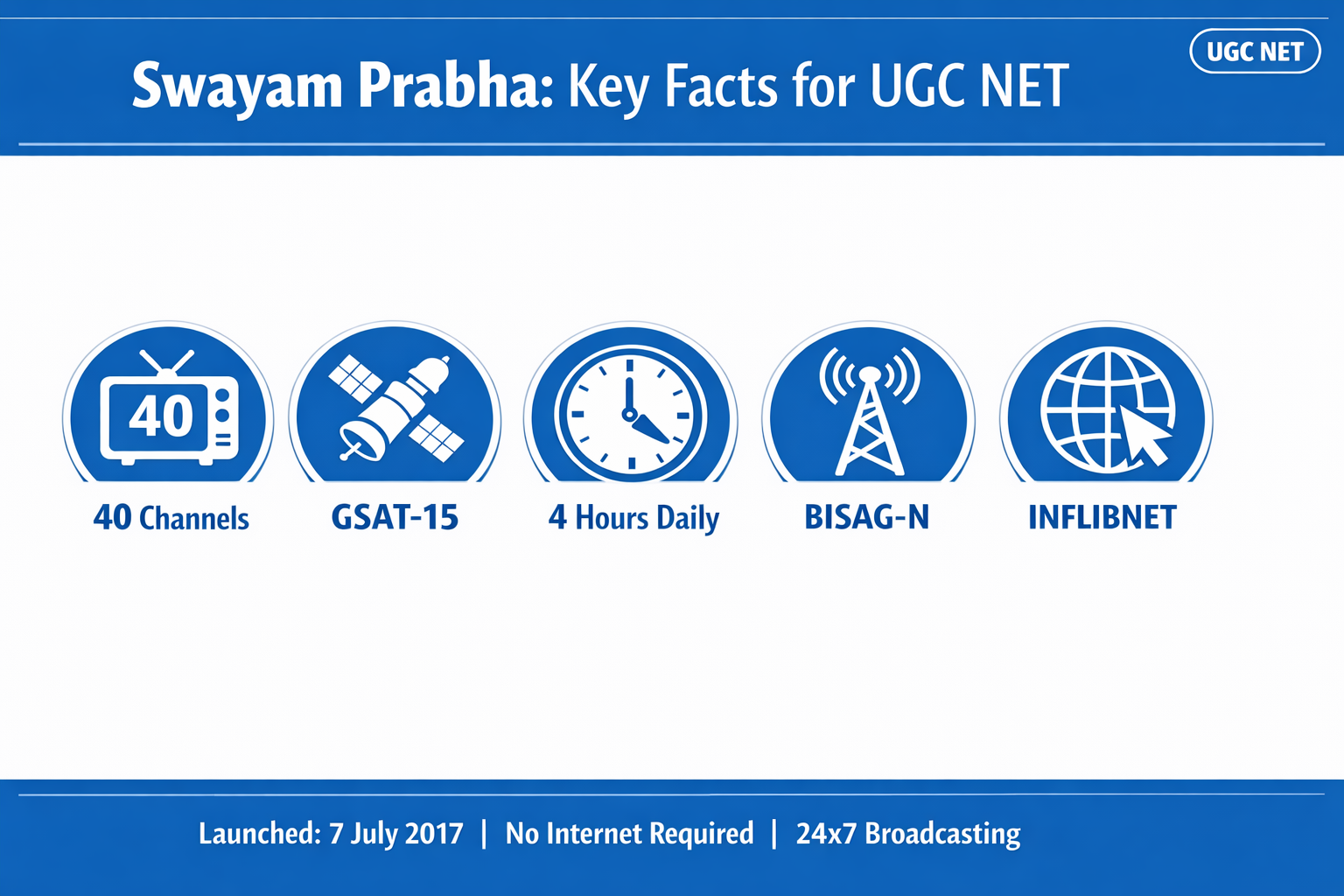
US CPA exam guide for Indians: Learn exam structure under CPA Evolution, eligibility requirements, complete costs in INR, and application process from India. This article is written by Rohit Arora, Senior Associate at LawSikho. The US CPA exam is the qualifying examination that opens doors to one of the world’s most respected accounting credentials, and Indian professionals are increasingly recognizing


Master Swayam Prabha for UGC NET. Quick guide covering 40 channels, GSAT-15, BISAG-N, INFLIBNET, and SWAYAM vs Prabha differences with exam tips. This article is written by Neeli Neelay Shah, Senior Legal Content Writer at LawSikho.

If you are preparing for UGC NET Paper 1, you have probably noticed that digital education initiatives like Swayam Prabha appear in almost every examination cycle. This DTH-based educational platform is a favorite testing ground for NTA, with questions appearing in matching columns, statement-based MCQs, and assertion-reason formats. The good news? Swayam Prabha questions are scoring opportunities if you know the right facts. This guide cuts through the clutter and gives you exactly what you need to know for exam success, covering the essential technical specifications, channel details, and the all-important SWAYAM vs Swayam Prabha distinction that trips up many aspirants.

Before diving into exam-specific preparation, you need a clear understanding of what Swayam Prabha actually is. This section gives you the foundational knowledge that forms the basis of most examination questions.

What Swayam Prabha Means and When Was It Started

Swayam Prabha is a Sanskrit term that translates to “self-luminous” or “self-shining.” The name reflects the initiative’s vision of empowering learners to shine through accessible education. Unlike acronym-based names, Swayam Prabha is simply a meaningful Sanskrit phrase chosen to represent the platform’s mission.

Download Now

The platform officially launched on 7 July 2017 under the Ministry of Human Resource Development (now renamed Ministry of Education). This date is worth remembering because NTA has asked about launch timelines in previous papers. At its inception, Swayam Prabha operated 32 DTH channels. Over time, this expanded to the current 40 channels, making it one of the most comprehensive free educational broadcasting initiatives in the world.

The initiative falls under the broader Digital India programme and represents the government’s commitment to making quality education accessible regardless of geographical location or economic status. For examination purposes, remember these two key facts: launched 7 July 2017, and currently operates 40 DTH channels.

Core Objective: Education Without Internet Barriers

The fundamental purpose of Swayam Prabha addresses a critical challenge in Indian education: internet connectivity remains inconsistent across large parts of the country. While urban areas enjoy reliable broadband, many rural and semi-urban regions still struggle with internet access. Swayam Prabha solves this problem by using satellite-based DTH technology instead of internet delivery.

This means a student in a remote village can access the same educational content as someone in a metropolitan city. The only requirement is a television with basic DTH setup, which is far more common than reliable internet connections in rural India. The platform broadcasts curriculum-based content covering disciplines from arts to engineering, at levels ranging from school education to postgraduate courses.

For your exam, understand that the core objective is bridging the digital divide by providing internet-independent access to quality education. Questions often test whether you understand why DTH was chosen over online delivery, and the answer lies in reaching learners where internet infrastructure is inadequate.

This is arguably the most important section for exam preparation. Confusing SWAYAM with Swayam Prabha is one of the most common mistakes aspirants make, and NTA specifically designs questions to test whether you understand the difference.

Key Differences 

SWAYAM and Swayam Prabha are two distinct initiatives launched within days of each other in July 2017. Despite their similar names, they operate on completely different models. SWAYAM (Study Webs of Active-Learning for Young Aspiring Minds) is an online MOOC platform that requires internet connectivity. You access it through the swayam.gov.in portal, enroll in courses, watch video lectures, complete assignments, participate in discussion forums, and earn certificates upon completion.

Swayam Prabha, in contrast, is a DTH television initiative that broadcasts educational content through satellite signals. No internet is required. You simply tune in to the relevant channel on your DTH service and watch the content. There are no enrollments, no assignments, no discussion forums, and no certificates. The content is purely supplementary and passive.

The critical distinctions to remember are: SWAYAM offers certificates and credit transfer (up to 20% of degree credits), while Swayam Prabha offers neither. SWAYAM requires internet, Swayam Prabha does not. SWAYAM is interactive with assessments, Swayam Prabha is passive viewing. When exam questions mention certificate provision or credit transfer, the answer is always SWAYAM, not Swayam Prabha.

Why NTA Tests This Comparison Frequently

NTA tests this comparison because it assesses whether aspirants have genuine conceptual clarity or merely surface-level familiarity with terms. The similar names create natural confusion, and distinguishing between the two requires understanding the fundamental nature of each platform.

Typical question formats include: “Which of the following provides certificates for course completion: SWAYAM or Swayam Prabha?” or “Statement 1: Swayam Prabha requires internet connectivity. Statement 2: SWAYAM offers credit transfer up to 20%.” You might also encounter assertion-reason questions like: “Assertion: Swayam Prabha can reach areas without the internet. Reason: Swayam Prabha uses DTH satellite broadcasting.”

The key to handling these questions is creating a clear mental separation between the two platforms. Think of SWAYAM as an “online course platform” and Swayam Prabha as “educational television.” This simple framing helps you instantly identify which platform a question refers to based on the context clues provided.

Technical specifications are a favorite testing area for NTA. Matching-type questions frequently ask you to connect components like the satellite, uplinking centre, and web portal manager with their correct identifications.

Broadcasting Infrastructure (GSAT-15, BISAG-N, INFLIBNET)

Three technical terms appear repeatedly in UGC NET questions, and you must memorize them with their exact functions. GSAT-15 is the satellite used for broadcasting Swayam Prabha channels across India. When a question asks about the satellite, the answer is always GSAT-15.

BISAG-N (Bhaskaracharya National Institute for Space Applications and Geo-informatics) in Gandhinagar, Gujarat is the uplinking centre. This is where the content is transmitted up to the satellite for nationwide distribution. When questions ask about the uplinking location or centre, the answer is BISAG-N Gandhinagar.

The INFLIBNET Centre (Information and Library Network) manages the web portal at swayamprabha.gov.in. While Swayam Prabha is primarily a DTH service, the web portal allows those with internet access to stream channels online and access archived content. When questions ask about portal management or digital archive maintenance, the answer is INFLIBNET.

Create a simple association: “G-B-I” for Satellite-Uplinking-Portal, mapping to GSAT-15, BISAG-N, and INFLIBNET respectively. This mnemonic helps you quickly match components in examination questions.

The 40 Channel Ecosystem and Content Providers

Swayam Prabha operates 40 DTH channels managed by different institutions. Understanding this ecosystem helps you answer questions about content providers and channel allocation. The major content providers are CEC (Consortium for Educational Communication), NPTEL (National Programme on Technology Enhanced Learning), IGNOU (Indira Gandhi National Open University), NCERT, NIOS, and IITs.

CEC manages Channels 1 to 10, covering humanities, social sciences, law, commerce, and natural sciences. These channels have distinctive Sanskrit names like VAGEESH, SANSKRITI, and KAUTILYA. IGNOU manages Channels 11 to 16 following the September 2023 reorganization. NPTEL provides engineering and technology content. IIT-PAL (Professor Assisted Learning) manages various channels, providing school-level content in Physics, Chemistry, Mathematics, and Biology.

Remember that the channel count has evolved: 32 channels at launch in 2017, expanded to 40 currently. Some older resources mention 32 or 34 channels, but for 2025 examinations, the answer is 40 channels.

Understanding how content is scheduled and accessed helps you answer questions about the platform’s operational details and viewer convenience features.

Daily Fresh Content (4 Hours) and Repeat Telecasts

Each Swayam Prabha channel broadcasts at least 4 hours of fresh content every day. This new content is then repeated 5 more times throughout the 24-hour cycle, giving viewers 6 opportunities to watch the same material. This scheduling model is specifically designed for learner convenience, allowing students to choose viewing times that fit their personal schedules.

The 24×7 broadcasting combined with repeat telecasts means students are not constrained by fixed timings. Whether you prefer studying early morning or late night, you can access the content. This flexibility is particularly valuable for working professionals and students balancing multiple commitments.

How to Access Swayam Prabha

You can access Swayam Prabha through multiple platforms. The simplest method is DD Free Dish, the government’s free DTH service. If you already have a commercial DTH connection like Dish TV, JioTV or Tata Play, Swayam Prabha channels are available in the educational channels section at no additional cost.

For those with internet access, the official web portal at swayamprabha.gov.in provides live streaming of all channels. The portal requires no registration or payment, making it completely free and accessible to anyone with an internet connection and a web browser.

Archive and On-Demand Viewing Options

Beyond live broadcasts, the INFLIBNET-managed web portal maintains a comprehensive archive of all previously broadcast content. This digital repository allows students to search for specific topics, access lectures from any date, and download videos for offline viewing.

The archive feature transforms Swayam Prabha from a purely broadcast platform into a searchable educational library. For exam preparation, you can focus on specific topics relevant to your syllabus rather than waiting for the relevant content to air. This on-demand capability significantly enhances the platform’s utility for serious learners.

This section focuses specifically on examination preparation, covering the facts you must memorize, the question types you will encounter, and strategies to avoid common mistakes.

Numbers and Statistics to Memorize

Certain numerical facts appear repeatedly in examinations and require straight memorization. Create flashcards for these and review them regularly during your preparation.

The essential numbers are: 40 channels (current total), 4 hours (fresh content daily), 5 times (repeat telecasts per day), 6 times (total viewing opportunities), 7 July 2017 (launch date). For channel allocation: 10 CEC channels (1-10), 6 IGNOU channels (11-16 from September 2023), IIT-PAL channels. Remember that broadcasting happens 24×7 across all 40 channels.

Use memory techniques to retain these numbers. For example, “7-7-17” encodes the launch date (7th day, 7th month, 2017). “40-4-5” represents channels-fresh hours-repeat times. Such patterns make recall easier under exam pressure.

Important Names and Technical Terms

Beyond numbers, several technical terms and institutional names require memorization. The satellite is GSAT-15. The uplinking centre is BISAG-N (Bhaskaracharya National Institute for Space Applications and Geo-informatics) in Gandhinagar. The web portal manager is INFLIBNET Centre.

Content providers include: CEC (Consortium for Educational Communication), NPTEL (National Programme on Technology Enhanced Learning), IGNOU (Indira Gandhi National Open University), NCERT (National Council of Educational Research and Training), NIOS (National Institute of Open Schooling), and IIT-PAL (Professor Assisted Learning by IITs).

Other terms worth knowing: DTH (Direct-to-Home), MOOC (Massive Open Online Course, used for SWAYAM comparison), Ministry of Education (formerly MHRD, the parent ministry). Familiarity with these terms helps you understand question contexts quickly.

Channel Names That You Must Know for UGC NET

NTA frequently tests CEC channel names and their subject areas through matching-type questions. Memorizing at least the key channels significantly improves your chances of scoring.

Important Channel Names

The CEC-managed channels (1-10) have Sanskrit names connected to their subject areas. VAGEESH (Channel 1) covers Language and Literature. The name means “Lord of Speech,” reflecting its focus on linguistic content. SANSKRITI (Channel 2) covers History, Culture, and Philosophy. The name means “Culture,” directly indicating its content domain.

PRABODH (Channel 3) covers Social and Behavioral Sciences. SAARASWAT (Channel 4) focuses on Education, Psychology, and Home Science. PRABANDHAN (Channel 5) covers Management and Information Science. The name means “Management,” making it easy to remember.

VIDHIK (Channel 6) is dedicated to Law and Legal Studies. This is particularly relevant for law aspirants. The name means “Legal,” directly indicating its content. KAUTILYA (Channel 7) covers Economics and Commerce. Named after the ancient economist Chanakya (also known as Kautilya), this channel is essential for Commerce aspirants.

ARYABHATT (Channel 8) covers Physical Sciences including Mathematics, Physics, and Chemistry. Named after the renowned mathematician and astronomer, this channel serves science students. SPANDAN (Channel 9) focuses on Life Sciences. DAKSH (Channel 10) covers Applied Sciences.

For quick memorization, focus on the channels most relevant to your UGC NET Paper 2 subject and the ones with the most memorable names: VIDHIK for Law, KAUTILYA for Commerce, ARYABHATT for Sciences, PRABANDHAN for Management.

Common Question Types in UGC NET

Understanding question patterns helps you prepare more effectively. Swayam Prabha questions typically appear in five formats.

Statement-based MCQs present multiple statements and ask you to identify correct or incorrect ones. Example: “Which statements are correct? (1) Swayam Prabha uses GSAT-15 satellite. (2) The web portal is managed by NCERT. (3) There are currently 40 channels.”

True/False questions test specific facts. Example: “Swayam Prabha was launched in 2015. True or False?”

Assertion-Reason questions test causal understanding. Example: “Assertion: Swayam Prabha reaches areas without internet. Reason: Swayam Prabha uses DTH satellite broadcasting.”

Matching the Column questions are extremely common. Example: “Match List I (Component) with List II (Identification): A. Satellite – I. INFLIBNET, B. Uplinking Centre – II. GSAT-15, C. Web Portal – III. BISAG-N.”

Fill in the blanks test specific recall. Example: “The Swayam Prabha web portal is managed by ________.”

Practice all five formats during your preparation. Pay special attention to matching questions, as they require precise memorization of associations.

Quick Revision Strategies for SWAYAM Prabha

Effective revision strategies can make the difference between vague familiarity and exam-ready clarity. Focus on techniques that maximize retention in minimum time.

Memory Techniques for Channel Details

Create category-based groupings for easier recall. Group CEC channels by subject: Humanities (VAGEESH, SANSKRITI), Social Sciences (PRABODH, SAARASWAT, PRABANDHAN, VIDHIK), Commerce (KAUTILYA), Natural Sciences (ARYABHATT, SPANDAN, DAKSH). This grouping helps you remember that CEC has “2 Humanities, 4 Social Sciences, 1 Commerce, 3 Natural Sciences” channels.

Use the first letters to create mnemonics. “VSPSPV KAS D” represents the ten CEC channel names in order. While not a meaningful word, practicing this sequence helps you recall all names quickly. Associate channel names with their meanings: Vidhik means legal, Kautilya was an economist, Aryabhatt was a scientist.

Last-Week Revision Checklist

In the final week before your exam, focus on consolidation rather than learning new material. Day 1-2: Review all numerical facts (40 channels, 4 hours, 7 July 2017, etc.) using flashcards. Test yourself by writing down all numbers from memory.

Day 3-4: Focus on technical infrastructure (GSAT-15, BISAG-N, INFLIBNET) and practice matching exercises. Create your own matching questions and solve them. Day 5-6: Review SWAYAM vs Swayam Prabha distinctions. Ensure you can instantly identify which platform offers certificates, requires internet, or provides credit transfer. Day 7: Quick review of channel names, solve 2-3 previous year questions, and relax.

Common Errors to Avoid in SWAYAM Prabha Questions

Being aware of common mistakes helps you avoid them during the actual examination. These errors cost many aspirants marks they could have easily scored.

SWAYAM vs SWAYAM Prabha: Key Differences

The most common error is confusing SWAYAM (online MOOC platform) with Swayam Prabha (DTH television initiative). When questions mention certificates, credit transfer, or online enrollment, the answer involves SWAYAM, not Swayam Prabha. When questions mention DTH channels, satellite broadcasting, or no internet requirement, the answer involves Swayam Prabha.

Remember: SWAYAM is “web-based” and Swayam Prabha is “TV-based.” SWAYAM has a full form acronym (Study Webs of Active-Learning for Young Aspiring Minds), while Swayam Prabha is simply a Sanskrit phrase meaning “Self-Luminous.” These simple distinctions help you avoid confusion during the exam.

Updated Facts and Technical Specifications

Another common error is using outdated information. Many online resources still mention 32 or 34 channels, but the current count is 40. The September 2023 reorganization assigned Channels 11-16 to IGNOU, changing the previous allocation. Using old information in answers can cost you marks.

Similarly, ensure you use the current name “Ministry of Education” rather than the older “Ministry of Human Resource Development” unless the question specifically refers to the historical context. Technical specifications like GSAT-15, BISAG-N, and INFLIBNET have remained consistent, so these are safe to memorize without worrying about updates.

Swayam Prabha questions in UGC NET are designed to test your factual recall and ability to distinguish between similar-sounding initiatives. By mastering the key facts covered in this guide, you position yourself to score confidently on these questions.

Remember the essentials: Swayam Prabha launched on 7 July 2017, operates 40 DTH channels, uses GSAT-15 satellite, has content uplinked from BISAG-N Gandhinagar, and its web portal is managed by INFLIBNET. Never confuse it with SWAYAM, the online MOOC platform that offers certificates and requires internet. The CEC channels (1-10) have memorable Sanskrit names like VIDHIK for Law and KAUTILYA for Commerce. With these facts firmly in your memory, Swayam Prabha questions become easy scoring opportunities rather than challenging obstacles. Focus on the distinctions, practice matching questions, and approach the exam with confidence!Want to know about this topic in greater detail? Click here to view my article on LawSikho.

Serato DJ Crack 2025Serato DJ PRO Crack


News
Berita Teknologi
Berita Olahraga
Sports news
sports
Motivation
football prediction
technology
Berita Technologi
Berita Terkini
Tempat Wisata
News Flash
Football
Gaming
Game News
Gamers
Jasa Artikel
Jasa Backlink
Agen234
Agen234
Agen234
Resep
Cek Ongkir Cargo
Download Film

Master Swayam Prabha for UGC NET. Quick guide covering 40 channels, GSAT-15, BISAG-N, INFLIBNET, and SWAYAM vs Prabha differences with exam tips. This article is written by Neeli Neelay Shah, Senior Legal Content Writer at LawSikho. If you are preparing for UGC NET Paper 1, you have probably noticed that digital education initiatives like Swayam Prabha appear in almost every