

If you work in product management, chances are, you’ve heard about or actively use Claude Code. Originally targeted for engineers, Claude Code is quickly becoming a go-to tool for PMs as well.
I’ve been continuously using the tool for the last three months, and I now spend about 90 percent of my time using it. From discovery and prioritization to building prototypes, I use Claude Code for everything.
But Claude Code is just one such tool. There’s also Codex from OpenAI and Antigravity from Google. So instead of focusing on one tool, this article unpacks how you can use code-style reasoning to make better product decisions.
Code-style reasoning forces you to externalize your thinking in a structured way. It also pushes you to define states, transitions, inputs, constraints, and failure modes. Let’s dig in.
What is code-style reasoning?
Code-style reasoning is a way of thinking where you define product decisions the way a system would execute them instead of the way humans describe them. This is how engineers design and code software.
It shifts your thinking from: “What do we want?” to “How does the system behave under specific conditions?”
Instead of writing: “Users retain access until the billing cycle ends.”
You think in terms of:
- States
- Conditions
- Triggers
- Rules
- Failure scenarios
This doesn’t mean you write production code — that’s still the job of an engineer. Instead, you think in system logic.
And when you reason this way:
- Assumptions become visible
- Conflicting rules surface
- Missing states show up
- Complexity becomes measurable
- Trade-offs become explicit
This way when the requirements finally go to the engineering, they know exactly what to build.
How to apply code-style reasoning to product decisions
Let’s go back to the earlier example of “Users should retain premium access until the end of their billing cycle after cancellation” and apply code-style reasoning.
1. Identify the entity
Start by asking yourself what object in the system is changing. In this case, it’s the subscription.
2. Define the possible states
With that out of the way, you’ll want to understand what states the entity can be in.
For example, the subscription could be:
- Active
- Cancelled
- Expired
- Payment Failed
- Refunded
Already, new questions naturally appear:
- Can cancelled and payment failed overlap?
- Does refunded override everything?
- Is expired different from cancelled?
Edge cases emerged from defining states.
3. Map the triggers
The next step is to determine what events cause state changes. These could be:
- User cancels
- Billing cycle ends
- Payment fails
- Refund issued
Now, ask yourself: What happens if two triggers happen close together?
This is where questions like these come from:
- What if the user cancels and the payment fails the same day?
- What if a refund is issued before billing ends?
- What if the user resubscribes immediately?
These aren’t random questions. This has happened to me in practical life. And I’m sure you’re nodding your head as well while reading this.
4. Write the explicit rules
At this stage, you need to define behavior clearly:
- If cancelled and still within the billing period → Access remains
- If the billing period ends → Access stops
- If a refund is issued → Define rules
- If payment fails → Define rules
Before you had a statement, whereas now you have a defined behavior.
Why context and decision memory matter
One of the most powerful features of code-style reasoning is context and memory.
Context refers to references about your project, company name, company details, user information, pricing models, business models, and competing companies. All of this is a part of the context.
Memory refers to what you did last time, where you paused or stopped, or where to resume.
A decision you make today will affect:
- Future roadmap discussions
- Enterprise negotiations
- Migration plans
- Refactors
- Pricing updates
So the real problem isn’t just unclear logic. It’s lost in context, too. Six months later, someone asks: “Why did we design it this way?” And no one is able to answer.
When you think structurally, you naturally document:
- What states existed
- What assumptions were made
- What trade-offs were accepted
- What constraints influenced the decision
This creates decision memory. Now, when something changes like a new pricing model, enterprise request, technical upgrade, you can re-evaluate the logic.
More great articles from LogRocket:
And instead of starting from scratch, you revisit the system model. This is very effective for PMs since you focus on multiple projects at the same time, and having the context and memory will help you restart from where you left off.
This is how engineers work, and you’re just borrowing a page from their book.
Currently, three major tools have captured most of the market. Here’s my experience with them:
Claude Code
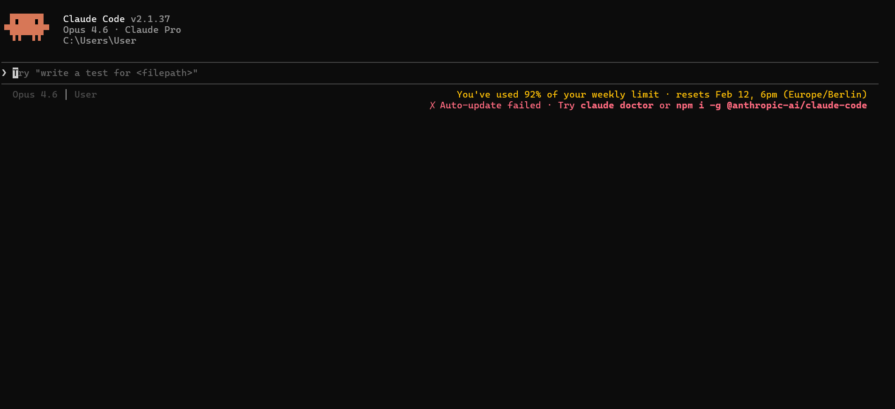
An AI agent built around the Claude language model that helps engineers work with code more effectively. It analyzes logic, tracks conditions, and understands system states in real projects. It’s a terminal-based product.
But if you are scared of the terminal, I can assure you that you don’t need to. The only command you need is “Claude.” After typing that, you should be able to use it like a normal prompting tool:
Features:
- Persistent context awareness — Understands project structure and maintains session-level awareness
- Memory within session — Remembers previous discussions, decisions, and constraints during the working session
- System-level reasoning skills — Designed to reason about logic, state transitions, dependencies, and edge cases
- Slash commands — Built-in commands (e.g., file edits, diffs, context loading) that structure interactions
- Multi-file context handling — Can reason across multiple components instead of isolated prompts
Codex by OpenAI
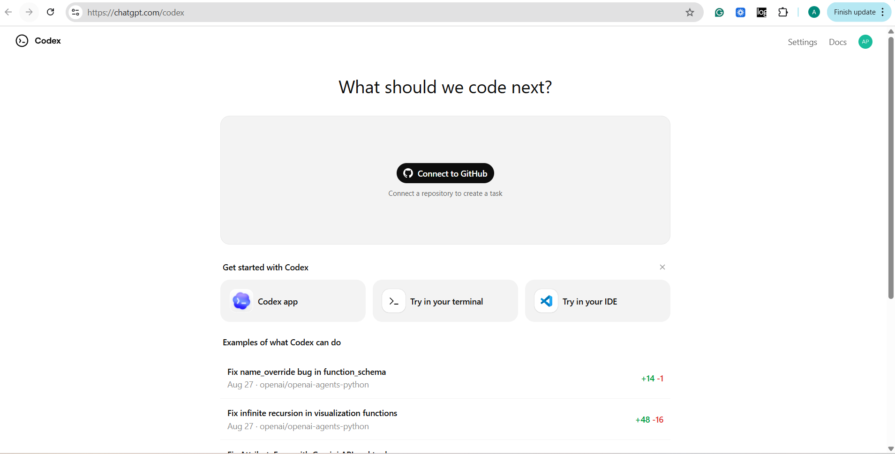
OpenAI Codex is a coding-focused AI model designed to translate natural language into structured logic and executable steps. It powers many AI development assistants and operates more as a reasoning engine than a persistent agent:
Features:
- Natural language → structured logic translation — Converts descriptive text into logical flows
- Conditional flow modeling — Good at breaking decisions into if/then branches
- Prompt-based interaction — Stateless interaction — each prompt is independent unless context is manually provided
- Reasoning across scenarios — Can simulate alternate paths quickly
Antigravity (by Google)
Antigravity is Google’s AI-powered coding environment focused on assisting developers with system-level reasoning and structured development workflows. It integrates AI into development environments rather than operating purely as a prompt tool:
Features:
- Integrated development context — Operates within structured project environments
- Dependency awareness — Maps relationships between components
- Impact analysis capabilities — Evaluates how changes affect connected systems
- Structured workflow integration — Designed to work alongside version control and system design processes
It’s important to remember that the tool you pick matters less than how you use them. These tools will only function better if you use them with a structured thought process. Otherwise, you’ll produce a useless output.
When to use code-style reasoning and when not to
Code-style reasoning isn’t equally useful in every product context. It delivers the most value when decisions depend on clear system behavior, but it should be applied more lightly when the work is still exploratory.
Best use cases for code-style reasoning
Code-style reasoning is most valuable when a product decision depends on clear logic, system behavior, or edge-case handling. It works especially well when:
- A feature involves state changes, such as subscriptions, orders, or multi-step workflows
- Multiple user roles or permission levels affect behavior
- Financial logic is involved
- Automation rules need to be defined
- Several systems interact with each other
In these situations, broad narrative thinking breaks down quickly. You need a more structured way to define how the system should behave under specific conditions.
When to avoid over-structuring
Code-style reasoning is less useful as the main approach when you are still exploring the problem space. For example, it should play a lighter role when:
- You’re exploring early concepts
- You’re validating user desirability
- You’re developing a long-term vision
- You’re working through a high-level strategy
At this stage, over-structuring can narrow thinking too early and reduce creativity. The goal is not to force every idea into rigid logic before you fully understand the user problem.
That said, code-style reasoning can still be helpful in small doses. Even during early exploration, it can help you break complex ideas into clearer parts, expose assumptions, and identify what would need to be true for the concept to work. The key is to use it as a supporting tool, not as a constraint on discovery.
A more structured way to make product decisions
As AI tools become more common in product work, product managers have more opportunities to think with greater precision. Code-style reasoning is valuable because it pushes you to make assumptions explicit, define system behavior clearly, and surface edge cases before they become problems.
For PMs, that shift can lead to better decisions, stronger collaboration with engineering, and clearer requirements. The goal isn’t to turn product managers into engineers — it’s to borrow a more structured way of thinking when the decision calls for it.
If you want to start building this skill, begin with a product area that already involves states, rules, or complex logic. You can use tools like Claude Code, Codex, or similar AI assistants to pressure-test your thinking, but the real value comes from the framework, not the tool itself.
I’d be interested to hear how other PMs are approaching this. What workflows or prompts have helped you reason through complex product decisions?
Featured image source: IconScout
LogRocket generates product insights that lead to meaningful action
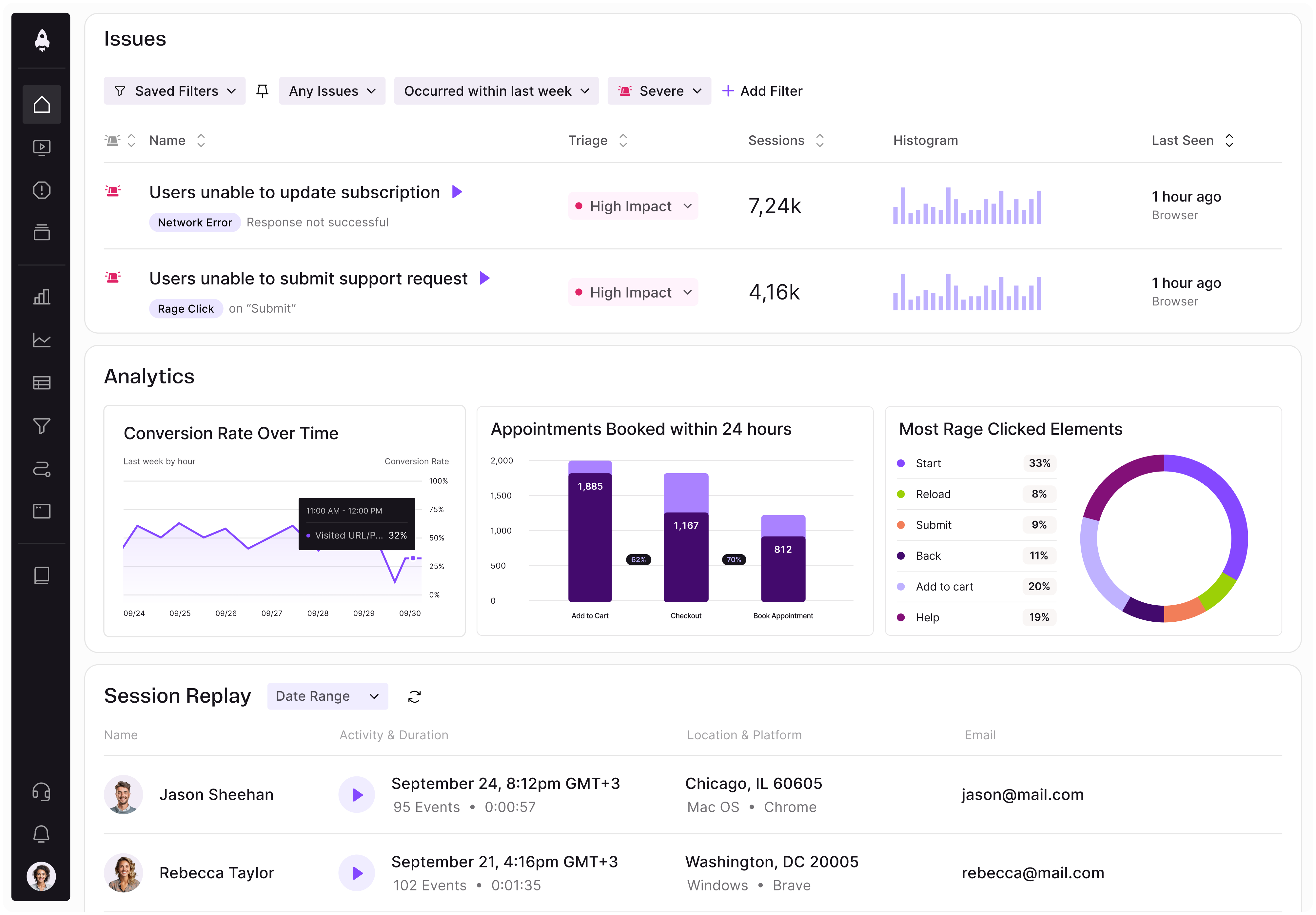
LogRocket identifies friction points in the user experience so you can make informed decisions about product and design changes that must happen to hit your goals.
With LogRocket, you can understand the scope of the issues affecting your product and prioritize the changes that need to be made. LogRocket simplifies workflows by allowing Engineering, Product, UX, and Design teams to work from the same data as you, eliminating any confusion about what needs to be done.
Get your teams on the same page — try LogRocket today.
PakarPBN
A Private Blog Network (PBN) is a collection of websites that are controlled by a single individual or organization and used primarily to build backlinks to a “money site” in order to influence its ranking in search engines such as Google. The core idea behind a PBN is based on the importance of backlinks in Google’s ranking algorithm. Since Google views backlinks as signals of authority and trust, some website owners attempt to artificially create these signals through a controlled network of sites.
In a typical PBN setup, the owner acquires expired or aged domains that already have existing authority, backlinks, and history. These domains are rebuilt with new content and hosted separately, often using different IP addresses, hosting providers, themes, and ownership details to make them appear unrelated. Within the content published on these sites, links are strategically placed that point to the main website the owner wants to rank higher. By doing this, the owner attempts to pass link equity (also known as “link juice”) from the PBN sites to the target website.
The purpose of a PBN is to give the impression that the target website is naturally earning links from multiple independent sources. If done effectively, this can temporarily improve keyword rankings, increase organic visibility, and drive more traffic from search results.